I just saw this video on youtube of james brown showing the way he danced.So is he actually ALSO the Godfather of the poplock AND the Robot-dance???Who knows this?I know MJ used to do the robot when he was little.Who invented it first? The street? JB? or MJ? or somebody else..?

Who invented the poplock and the robot?
- Thread starter OrangeYoghurt
- Start date
You are using an out of date browser. It may not display this or other websites correctly.
You should upgrade or use an alternative browser.
You should upgrade or use an alternative browser.
poplock is a bullshit term...there is popping...and there is locking...they are different dances. movements similar to popping can be traced all over time but it is credited to being birthed in cali. the inventor of locking is unidsputed. don campbell. mj was instructed by members of the electric boogaloos, a popping group. james brown definately influenced popping and bboying as well.
The story of the robot is both an inspirational Cal Ripken Jr.-like tale of endurance and a proud moment for Bay Area residents. Because while most innovative break-dancing moves were born in New York, the robot is all California -- perhaps the only major move that was discovered by the masses on the streets of San Francisco.
Actor and dancer Michael "Boogaloo Shrimp" Chambers did the robot multiple times during the 1984 film, including a memorable scene that features Chambers' character Turbo executing several creative dance moves on two walls and the ceiling, after his bedroom inexplicably loses the power of gravity.
Break-dancing was the word the media used in the 1980s to describe moves invented years earlier by the B-boys and B-girls from the Bronx. Chambers recalls that the intent of "Breakin' 2" was to introduce as many different dance styles as possible. But the robot -- an offshoot of a breaking style called popping -- is the one everyone remembers.
"After the film, that's what I started focusing on," Chambers said last week, talking on the phone at his Santa Monica home. "I wanted to perfect the animated look of a robot."
A successful roboteur will program his or her body to make smooth, simple and precise movements -- hopefully looking more like a machine than a man or woman. Throughout the 1980s and early 1990s, Chambers made a good living off the robot, performing as the Urkelbot in several episodes of "Family Matters" and as Good Robot Bill in "Bill & Ted's Bogus Journey."
All the while, he watched old Ray Harryhausen stop-motion films and stood outside department store windows, studying the movements of animatronic figures in the holiday displays. Chambers says one of his biggest robotic inspirations was Robert Shields of the San Francisco dance team Shields and Yarnell, who Chambers and most break-dancing historians credit with inventing the move. In a phone interview earlier this week, Shields said he started moving like a robot as far back as 1967, while working as a human mannequin at the Hollywood Wax Museum.
"I was getting bored standing like a statue," said Shields, who lives in Arizona now. "I started developing isolated movements, and the robot was born."
The robot became one of Shields' trademarks as he rose to fame in the 1970s, working as a mime at Union Square in San Francisco -- and later perfecting the moves with Lorene Yarnell on their own TV series, and on guest appearances on programs including "The Tonight Show" and "The Muppet Show."

Both Shields and Chambers say Michael Jackson was inspired by their moves during his years of greatest popularity. Shields' act seems to have had a particularly strong influence on the pop star -- the marching band fashions that helped Shields stand out in Union Square appear to have been adopted by Jackson during the "Thriller" years and beyond.
Actor and dancer Michael "Boogaloo Shrimp" Chambers did the robot multiple times during the 1984 film, including a memorable scene that features Chambers' character Turbo executing several creative dance moves on two walls and the ceiling, after his bedroom inexplicably loses the power of gravity.
Break-dancing was the word the media used in the 1980s to describe moves invented years earlier by the B-boys and B-girls from the Bronx. Chambers recalls that the intent of "Breakin' 2" was to introduce as many different dance styles as possible. But the robot -- an offshoot of a breaking style called popping -- is the one everyone remembers.
"After the film, that's what I started focusing on," Chambers said last week, talking on the phone at his Santa Monica home. "I wanted to perfect the animated look of a robot."
A successful roboteur will program his or her body to make smooth, simple and precise movements -- hopefully looking more like a machine than a man or woman. Throughout the 1980s and early 1990s, Chambers made a good living off the robot, performing as the Urkelbot in several episodes of "Family Matters" and as Good Robot Bill in "Bill & Ted's Bogus Journey."
All the while, he watched old Ray Harryhausen stop-motion films and stood outside department store windows, studying the movements of animatronic figures in the holiday displays. Chambers says one of his biggest robotic inspirations was Robert Shields of the San Francisco dance team Shields and Yarnell, who Chambers and most break-dancing historians credit with inventing the move. In a phone interview earlier this week, Shields said he started moving like a robot as far back as 1967, while working as a human mannequin at the Hollywood Wax Museum.
"I was getting bored standing like a statue," said Shields, who lives in Arizona now. "I started developing isolated movements, and the robot was born."
The robot became one of Shields' trademarks as he rose to fame in the 1970s, working as a mime at Union Square in San Francisco -- and later perfecting the moves with Lorene Yarnell on their own TV series, and on guest appearances on programs including "The Tonight Show" and "The Muppet Show."
Both Shields and Chambers say Michael Jackson was inspired by their moves during his years of greatest popularity. Shields' act seems to have had a particularly strong influence on the pop star -- the marching band fashions that helped Shields stand out in Union Square appear to have been adopted by Jackson during the "Thriller" years and beyond.

Gritty enough for the streets, dignified enough for a bar mitzvah and doable without getting too dirty, the robot is a dance that won't die
Robert Shields (right, with Lorene Yarnell) is credited with inventing the robot. Photo courtesy www.robertshieldsdesign.com
Sam bugaloo ...He is the founder for all of it
Also, shaba-doo ( ozone) put the original lockers together, and they changed the game up with their style.
All I know is that they danced to the illest funk style songs ever, 1 of them being KOKE by TRIBE

Also, shaba-doo ( ozone) put the original lockers together, and they changed the game up with their style.
All I know is that they danced to the illest funk style songs ever, 1 of them being KOKE by TRIBE


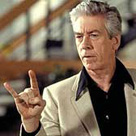


Do you know what year that James Brown Dance Lesson (on YouTube) was recorded? To me, it looks like 1975 or 76. Well, he does the robot in that video (and refers to it as the robot). So, unless that video was recorded in the mid 80s, I'd have to say James was doing that dance before Mr. Chambers (and others were probably doing it before James).Actor and dancer Michael "Boogaloo Shrimp" Chambers did the robot multiple times during the 1984 film, including a memorable scene that features Chambers' character Turbo executing several creative dance moves on two walls and the ceiling, after his bedroom inexplicably loses the power of gravity.
I'll have to watch the Future Shock footage I have (James Brown's 1976 dance show). I think there's some robot footage in there.
You'd never get away with silent tv these days.. wish i was old enough to have seen all that, just about pushin 30 now.
After success on the Ted Mack Amateur Hour, Shields & Yarnell moved to Los Angeles, where they brought their mix of new vaudeville and physical comedy to their gigs as regulars on ???The Mac Davis Show???. When that was cancelled, they were quickly snatched up by CBS to appear as regulars on "The Sonny & Cher Show" in 1976. Due to their overwhelming popularity and successful reviews, CBS gave them their own variety show. Many fondly remember the robot characters, "The Clinkers," which they created at that time and still perform in their act to this day.
At their height, famous fans such as Jackie Gleason, Milton Berle, George Burns, Jack Lemmon, Bob Hope, Lucille Ball, Danny Thomas, Frank Sinatra, Johnny Carson, and countless others were tuning in regularly. In fact, it was even said that Elvis??? favorite TV show was Shields & Yarnell. Michael Jackson and his family were fascinated by the show and watched it religiously, with Jackson eventually incorporating Shields??? mechanical routines in the Jackson 5 act. Even Groucho Marx fell in love with the young mime team, inviting them to his house for hours on end, and making a rare trip to see them perform in Vegas.
When the television show ended, Shields and Yarnell continued to perform ??? in Las Vegas (winning 2 successive Entertainer of the Year awards), on Broadway, with orchestras across the country, and all around the world. They accompanied Bob Hope on his landmark visit to China, and made numerous guest appearances on television shows such as ???The Muppet Show,??? ???The Return of the Wild Wild West,??? ???Wonder Woman,??? ???The Merv Griffin Show,??? and ???The Tonight Show.???
All in all, Shields and Yarnell have performed on over 400 television shows. They have been described as "pioneers of the theatrical form of outrageous controlled insanity dubbed the ???new vaudeville.???" They combine artistry from the past along with newer concepts, such as the use of voice-overs, soundtracks, and sound effects. Their spontaneous improvisation changes with the audience.
With elasticity, unlimited invention, and boundless energy, they enter into a fantasy world, sweeping you along with them. Their gift is magic!
After success on the Ted Mack Amateur Hour, Shields & Yarnell moved to Los Angeles, where they brought their mix of new vaudeville and physical comedy to their gigs as regulars on ???The Mac Davis Show???. When that was cancelled, they were quickly snatched up by CBS to appear as regulars on "The Sonny & Cher Show" in 1976. Due to their overwhelming popularity and successful reviews, CBS gave them their own variety show. Many fondly remember the robot characters, "The Clinkers," which they created at that time and still perform in their act to this day.
At their height, famous fans such as Jackie Gleason, Milton Berle, George Burns, Jack Lemmon, Bob Hope, Lucille Ball, Danny Thomas, Frank Sinatra, Johnny Carson, and countless others were tuning in regularly. In fact, it was even said that Elvis??? favorite TV show was Shields & Yarnell. Michael Jackson and his family were fascinated by the show and watched it religiously, with Jackson eventually incorporating Shields??? mechanical routines in the Jackson 5 act. Even Groucho Marx fell in love with the young mime team, inviting them to his house for hours on end, and making a rare trip to see them perform in Vegas.
When the television show ended, Shields and Yarnell continued to perform ??? in Las Vegas (winning 2 successive Entertainer of the Year awards), on Broadway, with orchestras across the country, and all around the world. They accompanied Bob Hope on his landmark visit to China, and made numerous guest appearances on television shows such as ???The Muppet Show,??? ???The Return of the Wild Wild West,??? ???Wonder Woman,??? ???The Merv Griffin Show,??? and ???The Tonight Show.???
All in all, Shields and Yarnell have performed on over 400 television shows. They have been described as "pioneers of the theatrical form of outrageous controlled insanity dubbed the ???new vaudeville.???" They combine artistry from the past along with newer concepts, such as the use of voice-overs, soundtracks, and sound effects. Their spontaneous improvisation changes with the audience.
With elasticity, unlimited invention, and boundless energy, they enter into a fantasy world, sweeping you along with them. Their gift is magic!
Do you know what year that James Brown Dance Lesson (on YouTube) was recorded? To me, it looks like 1975 or 76. Well, he does the robot in that video (and refers to it as the robot). So, unless that video was recorded in the mid 80s, I'd have to say James was doing that dance before Mr. Chambers (and others were probably doing it before James).Actor and dancer Michael "Boogaloo Shrimp" Chambers did the robot multiple times during the 1984 film, including a memorable scene that features Chambers' character Turbo executing several creative dance moves on two walls and the ceiling, after his bedroom inexplicably loses the power of gravity.
I'll have to watch the Future Shock footage I have (James Brown's 1976 dance show). I think there's some robot footage in there.
(Shields said he started moving like a robot as far back as 1967, while working as a human mannequin at the Hollywood Wax Museum.)
It may have not been invented by shields, but no other documentation proves otherwise, it certainly was NOT james brown....
Do you know what year that James Brown Dance Lesson (on YouTube) was recorded? To me, it looks like 1975 or 76. Well, he does the robot in that video (and refers to it as the robot). So, unless that video was recorded in the mid 80s, I'd have to say James was doing that dance before Mr. Chambers (and others were probably doing it before James).Actor and dancer Michael "Boogaloo Shrimp" Chambers did the robot multiple times during the 1984 film, including a memorable scene that features Chambers' character Turbo executing several creative dance moves on two walls and the ceiling, after his bedroom inexplicably loses the power of gravity.
I'll have to watch the Future Shock footage I have (James Brown's 1976 dance show). I think there's some robot footage in there.
(Shields said he started moving like a robot as far back as 1967, while working as a human mannequin at the Hollywood Wax Museum.)
It may have not been invented by shields, but no other documentation proves otherwise, it certainly was NOT james brown....
I wasn't suggesting that James Brown invented it, of course. Reading the Chamber's blurb, it seemed to suggest that the dance was first done in the 80s (I probably misread it). I just mentioned the JB footage as a quick reference to the dance being done at least 8-10 years earlier.

MJ took that shit from the OGs.
Shabba-Doo is w/ his crew in the first season of Saturday Night Live which is 1975.
And another dude does the RoBot. The girl in the crew is Toni Basil. Their poppin to the house band rendition of Express by B.T.Express. Great Footage.
And dont forget that crew or some variation was on What's Happening for a couple of episodes. - 1978.
And if you look close youll see a very young Fred ReRun Berry in WattStax DVD.- 1972.
Shabba-Doo is w/ his crew in the first season of Saturday Night Live which is 1975.
And another dude does the RoBot. The girl in the crew is Toni Basil. Their poppin to the house band rendition of Express by B.T.Express. Great Footage.
And dont forget that crew or some variation was on What's Happening for a couple of episodes. - 1978.
And if you look close youll see a very young Fred ReRun Berry in WattStax DVD.- 1972.

I've seen the footage you're talking about, and it definitely sounds like Don Pardo announcing it, but I've checked episode guides and I can't seem to find them listed as guests anywhere. Are you sure that's SNL and not another NBC special?Shabba-Doo is w/ his crew in the first season of Saturday Night Live which is 1975.
And another dude does the RoBot. The girl in the crew is Toni Basil. Their poppin to the house band rendition of Express by B.T.Express. Great Footage.
Here are the original lockers back in 1973...the original lockers consisted of fred berry and ozone and some other cats.Now you see where micheal got the dance moves for the wiz
http://www.youtube.com/watch?v=Y_Fj9dOGAVs
Also, the dope skit when they were on what's happening:
( no music though...you can also see a little of the marx brothers in their routine..style wise)
Now peep the nicholas brothers and watch very closely ..this is 1930's...but it is still considered the greatest dance ever done on screen!..and I concur..and they did it in one take
My observation is that popping and locking were influnced by the following:
the nicholas brothers
the marx brothers ( the look and style)
JB
Lorene Yarnell and Robert shields
as well as clowns and mimes ...but everything comes from the nicholas brothers ..no father to their style
http://www.youtube.com/watch?v=Y_Fj9dOGAVs
Also, the dope skit when they were on what's happening:
( no music though...you can also see a little of the marx brothers in their routine..style wise)
Now peep the nicholas brothers and watch very closely ..this is 1930's...but it is still considered the greatest dance ever done on screen!..and I concur..and they did it in one take
My observation is that popping and locking were influnced by the following:
the nicholas brothers
the marx brothers ( the look and style)
JB
Lorene Yarnell and Robert shields
as well as clowns and mimes ...but everything comes from the nicholas brothers ..no father to their style
Similar threads

- Replies
- 7
- Views
- 765

- Replies
- 4
- Views
- 2K


- Replies
- 0
- Views
- 445
- Replies
- 0
- Views
- 451
- Replies
- 0
- Views
- 456