
Black Lives Matter
- Thread starter Soul Zilla
- Start date
You are using an out of date browser. It may not display this or other websites correctly.
You should upgrade or use an alternative browser.
You should upgrade or use an alternative browser.

batmon said:Soul Zilla said: Here's a test for you racist accusers out there: just substitute black for white in American history. Would the outcome be different?
So Africa would be white and European slave traders would be Black?
Black folks genocide Native Americans and white slaves build the country?
All previous presidents are Black Men and Obama is President Barry?
That doesnt sound scientific and it simplifies too many random factors.
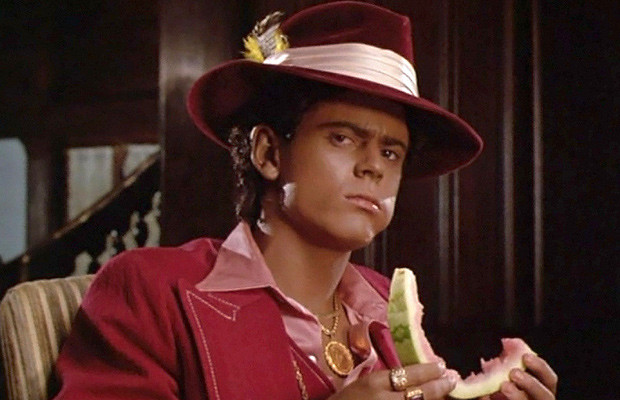
Not scientific, but it's already been done, when John Travolta taught us all a valuable lesson about social inequality.
So Africa would be white and European slave traders would be Black?
Black folks genocide Native Americans and white slaves build the country?
All previous presidents are Black Men and Obama is President Barry?
That doesnt sound scientific and it simplifies too many random factors.
Not scientific, but it's already been done, when John Travolta taught us all a valuable lesson about social inequality.

When talking about the use of scientific method, the biggest problem we face is that it will not produce a useful result if the underlying basis is flawed. The quality of its output depends upon the quality of its input.
The prison example is interesting, but not particularly valid. Since anyone entering a prison brings with them the behavior learned from living as part of their particular society, culture, family, etc., it doesn't exactly constitute a controlled environment in this context.
All in all, there's nothing especially intellectual or scientific about this line of argument. You might consider an approach closer to what Big Stacks took above, i.e. he references actual science to make his point. Documented, supported evidence holds more weight in this type of discussion than opinions based on conjecture and hearsay.
Perhaps a look into evolutionary psychology would also help, as much of that field's body of work would not support your assertion that humans have shown the same thought process and behavior for their entire history.
The statement about not being authoritarian is curious, given that it follows several statements about the importance of respecting authority (regardless of whether said authority is in line with the rule of law), and is concurrent with the presentation of yourself as an authority to be respected (as evidenced by your patronizing, pre-emptive dismissal of those who might contradict you).
Soul Zilla said: Why are the most vocal the least informed?
Given that you are by far the most vocal person in this thread, and are known for making lengthy posts on these kinds of topics, it's possible you may have the answer to your own question.
The prison example is interesting, but not particularly valid. Since anyone entering a prison brings with them the behavior learned from living as part of their particular society, culture, family, etc., it doesn't exactly constitute a controlled environment in this context.
All in all, there's nothing especially intellectual or scientific about this line of argument. You might consider an approach closer to what Big Stacks took above, i.e. he references actual science to make his point. Documented, supported evidence holds more weight in this type of discussion than opinions based on conjecture and hearsay.
Perhaps a look into evolutionary psychology would also help, as much of that field's body of work would not support your assertion that humans have shown the same thought process and behavior for their entire history.
The statement about not being authoritarian is curious, given that it follows several statements about the importance of respecting authority (regardless of whether said authority is in line with the rule of law), and is concurrent with the presentation of yourself as an authority to be respected (as evidenced by your patronizing, pre-emptive dismissal of those who might contradict you).
Soul Zilla said: Why are the most vocal the least informed?
Given that you are by far the most vocal person in this thread, and are known for making lengthy posts on these kinds of topics, it's possible you may have the answer to your own question.

Fred_Garvin said:When talking about the use of scientific method, the biggest problem we face is that it will not produce a useful result if the underlying basis is flawed. The quality of its output depends upon the quality of its input.
The prison example is interesting, but not particularly valid. Since anyone entering a prison brings with them the behavior learned from living as part of their particular society, culture, family, etc., it doesn't exactly constitute a controlled environment in this context.
All in all, there's nothing especially intellectual or scientific about this line of argument. You might consider an approach closer to what Big Stacks took above, i.e. he references actual science to make his point. Documented, supported evidence holds more weight in this type of discussion than opinions based on conjecture and hearsay.
Perhaps a look into evolutionary psychology would also help, as much of that field's body of work would not support your assertion that humans have shown the same thought process and behavior for their entire history.
The statement about not being authoritarian is curious, given that it follows several statements about the importance of respecting authority (regardless of whether said authority is in line with the rule of law), and is concurrent with the presentation of yourself as an authority to be respected (as evidenced by your patronizing, pre-emptive dismissal of those who might contradict you).
Soul Zilla said: Why are the most vocal the least informed?
Given that you are by far the most vocal person in this thread, and are known for making lengthy posts on these kinds of topics, it's possible you may have the answer to your own question.
Hey Fred,
In fairness to Soul Zilla, I have to say that I am a professor at a Research I institution (where faculty engage in scholarly research) by trade, so I tend to approach issues in scientific terms. This tendency is further bolstered by factors such as (a) teaching masters and doctoral level statistics, and (b) advising doctoral students on their research. So, I don't expect the general public to pursue cause-and-effect (and/or correlational) analyses as I do. I just try to enlighten folks on issues upon which I am conversant by providing potential explanations for some of the phenomena we witness out in the world. I also acknowledge that we can never explain human behavior with 100% accuracy. Yet, for a lot of topics, there is research evidence that illuminates many of the trends we see in society.
Peace,
Big Stacks from Kakalak
The prison example is interesting, but not particularly valid. Since anyone entering a prison brings with them the behavior learned from living as part of their particular society, culture, family, etc., it doesn't exactly constitute a controlled environment in this context.
All in all, there's nothing especially intellectual or scientific about this line of argument. You might consider an approach closer to what Big Stacks took above, i.e. he references actual science to make his point. Documented, supported evidence holds more weight in this type of discussion than opinions based on conjecture and hearsay.
Perhaps a look into evolutionary psychology would also help, as much of that field's body of work would not support your assertion that humans have shown the same thought process and behavior for their entire history.
The statement about not being authoritarian is curious, given that it follows several statements about the importance of respecting authority (regardless of whether said authority is in line with the rule of law), and is concurrent with the presentation of yourself as an authority to be respected (as evidenced by your patronizing, pre-emptive dismissal of those who might contradict you).
Soul Zilla said: Why are the most vocal the least informed?
Given that you are by far the most vocal person in this thread, and are known for making lengthy posts on these kinds of topics, it's possible you may have the answer to your own question.
Hey Fred,
In fairness to Soul Zilla, I have to say that I am a professor at a Research I institution (where faculty engage in scholarly research) by trade, so I tend to approach issues in scientific terms. This tendency is further bolstered by factors such as (a) teaching masters and doctoral level statistics, and (b) advising doctoral students on their research. So, I don't expect the general public to pursue cause-and-effect (and/or correlational) analyses as I do. I just try to enlighten folks on issues upon which I am conversant by providing potential explanations for some of the phenomena we witness out in the world. I also acknowledge that we can never explain human behavior with 100% accuracy. Yet, for a lot of topics, there is research evidence that illuminates many of the trends we see in society.
Peace,
Big Stacks from Kakalak
Understood, completely, and I don't necessarily expect everyone to cite research at the level you would, although statements about complex issues are best served when backed with (at least) a bit of substance.
However, when a person claims that their opinion is grounded in scientific method, but uses no actual science or evidence to support it, while attempting to place themselves above those to whom they chose to bring their argument, I do think it's fair to call them out... and for that matter, I do expect that someone making a claim about anything would do some critical thinking beyond "This is what I say it is, and anyone who claims otherwise is wrong".
However, when a person claims that their opinion is grounded in scientific method, but uses no actual science or evidence to support it, while attempting to place themselves above those to whom they chose to bring their argument, I do think it's fair to call them out... and for that matter, I do expect that someone making a claim about anything would do some critical thinking beyond "This is what I say it is, and anyone who claims otherwise is wrong".
LaserWolf said:You've got it backwards.
The racists are the true victims.
You can get rope burns doing a lynching. Makes it hard to masturbate afterwards.
And yes, that's a nasty thing to write, but not nearly as nasty as Zilla's daily affirmations.
The racists are the true victims.
You can get rope burns doing a lynching. Makes it hard to masturbate afterwards.
And yes, that's a nasty thing to write, but not nearly as nasty as Zilla's daily affirmations.

Fred_Garvin said:batmon said:Soul Zilla said: Here's a test for you racist accusers out there: just substitute black for white in American history. Would the outcome be different?
So Africa would be white and European slave traders would be Black?
Black folks genocide Native Americans and white slaves build the country?
All previous presidents are Black Men and Obama is President Barry?
That doesnt sound scientific and it simplifies too many random factors.
Not scientific, but it's already been done, when John Travolta taught us all a valuable lesson about social inequality.
Let me dumb it down for you. It's people in power versus those that aren't. Was Europe more scientifically and militarily powerful at the time?
Whether those group of humans were black or white didn't matter. What matters is human nature and the desire, be it subconscious or not, for the powerful to subjugate and exploit the weak. It's been present in nearly all human civilizations for all of recorded history.
I'm talking about human nature not skin color. I'm saying that the melanin content of your skin doesn't absolve you of or dictate how you act. People in power exploit the weaker. That is human nature. Is that moral, of course not, is it honest, yes.
If you believe otherwise then you are racist because you're essentially saying that only white people are capable of evil and blacks are not. That if the roles were reversed and had the Europeans been black people this wouldn't have happened the way it did.
It's not racist to say skin color doesn't matter. It is racist to say that it does.
Is that clear?
By the way a well regarded and influential anthropologist wrote a highly acclaimed and awarded (I think it won a Pulitzer) book called "Guns, Germs, and Steel" that lays down the scientific reasons for the wide ranging disparities between ethnic groups of humans. His name is Jared Diamond. Hint, it has nothing to do with skin color. So if you're curious about the sources of my knowledge then this is a book you should read.
If you're not the type to read an exhausting tome then you can watch the series produced by either Nova or PBS.
So Africa would be white and European slave traders would be Black?
Black folks genocide Native Americans and white slaves build the country?
All previous presidents are Black Men and Obama is President Barry?
That doesnt sound scientific and it simplifies too many random factors.
Not scientific, but it's already been done, when John Travolta taught us all a valuable lesson about social inequality.
Let me dumb it down for you. It's people in power versus those that aren't. Was Europe more scientifically and militarily powerful at the time?
Whether those group of humans were black or white didn't matter. What matters is human nature and the desire, be it subconscious or not, for the powerful to subjugate and exploit the weak. It's been present in nearly all human civilizations for all of recorded history.
I'm talking about human nature not skin color. I'm saying that the melanin content of your skin doesn't absolve you of or dictate how you act. People in power exploit the weaker. That is human nature. Is that moral, of course not, is it honest, yes.
If you believe otherwise then you are racist because you're essentially saying that only white people are capable of evil and blacks are not. That if the roles were reversed and had the Europeans been black people this wouldn't have happened the way it did.
It's not racist to say skin color doesn't matter. It is racist to say that it does.
Is that clear?
By the way a well regarded and influential anthropologist wrote a highly acclaimed and awarded (I think it won a Pulitzer) book called "Guns, Germs, and Steel" that lays down the scientific reasons for the wide ranging disparities between ethnic groups of humans. His name is Jared Diamond. Hint, it has nothing to do with skin color. So if you're curious about the sources of my knowledge then this is a book you should read.
If you're not the type to read an exhausting tome then you can watch the series produced by either Nova or PBS.
I had a long winded thoughtful response for you, but in the end, all I really want to say is: die, bitch. Seriously.
Soul Zilla said: Why are the most vocal the least informed?
That was a good phrase but poorly employed. What I meant by it is that when you're debating someone, and I think we've all experienced this, one side may be calm, careful, and logical and then begins to dismantle the other side's claims or beliefs and instead of a rational and cogent response the other side simply repeats the same assertions louder and louder.
They cling to their beliefs despite strong evidence contradicting it, and without a leg to stand on, they double down and merely increase the volume of their claim as if it becomes more true if they shout it more passionately.
That's how I feel about a lot of these, not all, protesters.
That's what I meant.
But a nice if not rather obvious "gotcha" on me. Thanks guys.
That's in the same line of other criticisms in this thread.
I write in a stream-of-consciousness way. I don't edit or reread until someone says something like this. And I usually write late at night with a buzz. So those without vice feel free to cast stones.
That was a good phrase but poorly employed. What I meant by it is that when you're debating someone, and I think we've all experienced this, one side may be calm, careful, and logical and then begins to dismantle the other side's claims or beliefs and instead of a rational and cogent response the other side simply repeats the same assertions louder and louder.
They cling to their beliefs despite strong evidence contradicting it, and without a leg to stand on, they double down and merely increase the volume of their claim as if it becomes more true if they shout it more passionately.
That's how I feel about a lot of these, not all, protesters.
That's what I meant.
But a nice if not rather obvious "gotcha" on me. Thanks guys.
That's in the same line of other criticisms in this thread.
I write in a stream-of-consciousness way. I don't edit or reread until someone says something like this. And I usually write late at night with a buzz. So those without vice feel free to cast stones.
HarveyCanal said:I had a long winded thoughtful response for you, but in the end, all I really want to say is: die, bitch. Seriously.
Don't front Harvey tell me how you really feel.
I wish you a long productive life.
Don't front Harvey tell me how you really feel.
I wish you a long productive life.
^^^^^^^^^^^^^^^
Has a growing collection of human ears.
Souvenirs from his "scientific method" soirees.
Has a growing collection of human ears.
Souvenirs from his "scientific method" soirees.
LazarusOblong said:LaserWolf said:You've got it backwards.
The racists are the true victims.
You can get rope burns doing a lynching. Makes it hard to masturbate afterwards.
And yes, that's a nasty thing to write, but not nearly as nasty as Zilla's daily affirmations.
Laz, I missed you and your nonsense. You're an incredibly powerful insulter, and equally shallow in the depth of your analysis. Thanks for displaying it every time you type. There should be an award for this level of human ignorance.
You ain't got nothing on that caveman bro. Stone Age for days. Laz represent
The racists are the true victims.
You can get rope burns doing a lynching. Makes it hard to masturbate afterwards.
And yes, that's a nasty thing to write, but not nearly as nasty as Zilla's daily affirmations.
Laz, I missed you and your nonsense. You're an incredibly powerful insulter, and equally shallow in the depth of your analysis. Thanks for displaying it every time you type. There should be an award for this level of human ignorance.
You ain't got nothing on that caveman bro. Stone Age for days. Laz represent
Soul Zilla said:HarveyCanal said:I had a long winded thoughtful response for you, but in the end, all I really want to say is: die, bitch. Seriously.
Don't front Harvey tell me how you really feel.
I wish you a long productive life.
In your quest to avoid implicating all whites of racism, you are in effect sticking up for those whites who are not just racist but murderously racist. And that is just stupidly, heinously wrong. PERIOD.
Don't front Harvey tell me how you really feel.
I wish you a long productive life.
In your quest to avoid implicating all whites of racism, you are in effect sticking up for those whites who are not just racist but murderously racist. And that is just stupidly, heinously wrong. PERIOD.
HarveyCanal said:Soul Zilla said:HarveyCanal said:I had a long winded thoughtful response for you, but in the end, all I really want to say is: die, bitch. Seriously.
Don't front Harvey tell me how you really feel.
I wish you a long productive life.
In your quest to avoid implicating all whites of racism, you are in effect sticking up for those whites who are not just racist but murderously racist. And that is just stupidly, heinously wrong. PERIOD.
That's not my quest. By what means are you able to know the subjective thoughts of another? Are you a mind reader? A psychic? Would you like me to buy a pencil from your cup?
Don't front Harvey tell me how you really feel.
I wish you a long productive life.
In your quest to avoid implicating all whites of racism, you are in effect sticking up for those whites who are not just racist but murderously racist. And that is just stupidly, heinously wrong. PERIOD.
That's not my quest. By what means are you able to know the subjective thoughts of another? Are you a mind reader? A psychic? Would you like me to buy a pencil from your cup?
Soul Zilla said:LazarusOblong said:LaserWolf said:You've got it backwards.
The racists are the true victims.
You can get rope burns doing a lynching. Makes it hard to masturbate afterwards.
And yes, that's a nasty thing to write, but not nearly as nasty as Zilla's daily affirmations.
Laz, I missed you and your nonsense. You're an incredibly powerful insulter, and equally shallow in the depth of your analysis. Thanks for displaying it every time you type. There should be an award for this level of human ignorance.
You ain't got nothing on that caveman bro. Stone Age for days. Laz represent
I refute you thusly.
(Stomps on Zilla's overstuffed head.)
You are not worth the time it takes for subtlety, little man. wrapping your racism in academic tones doesn't hide what you are. You're a motherfucking slug in need of a good salting.
The racists are the true victims.
You can get rope burns doing a lynching. Makes it hard to masturbate afterwards.
And yes, that's a nasty thing to write, but not nearly as nasty as Zilla's daily affirmations.
Laz, I missed you and your nonsense. You're an incredibly powerful insulter, and equally shallow in the depth of your analysis. Thanks for displaying it every time you type. There should be an award for this level of human ignorance.
You ain't got nothing on that caveman bro. Stone Age for days. Laz represent
I refute you thusly.
(Stomps on Zilla's overstuffed head.)
You are not worth the time it takes for subtlety, little man. wrapping your racism in academic tones doesn't hide what you are. You're a motherfucking slug in need of a good salting.



Similar threads

- Replies
- 5
- Views
- 1K


- Replies
- 17
- Views
- 2K

