Django Unchained (QTR)
- Thread starter JATX
- Start date
You are using an out of date browser. It may not display this or other websites correctly.
You should upgrade or use an alternative browser.
You should upgrade or use an alternative browser.



staxwax said:Whats your opinion on the slavery exploitation comedy schtick in Django? what was the comedy shtick?
How can you people go see this movie two to three times? Its way too long. I have more to do in my life than sit thru a 165min movie again!!
The movie is entertaining though.
Thought the Rick Ross song was to appeal to black crowds. I enjoyed that song in the film but couldn't stand the 2Pac mash/mix at the end.
The movie is entertaining though.
Thought the Rick Ross song was to appeal to black crowds. I enjoyed that song in the film but couldn't stand the 2Pac mash/mix at the end.

Burns said:How can you people go see this movie two to three times? Its way too long. I have more to do in my life than sit thru a 165min movie again!!
The movie is entertaining though.
Thought the Rick Ross song was to appeal to black crowds. I enjoyed that song in the film but couldn't stand the 2Pac mash/mix at the end.
I've seen Seven Samurai at least 10+ times. The movie length is 207 minutes. I must be nuts according to your standard.
The movie is entertaining though.
Thought the Rick Ross song was to appeal to black crowds. I enjoyed that song in the film but couldn't stand the 2Pac mash/mix at the end.
I've seen Seven Samurai at least 10+ times. The movie length is 207 minutes. I must be nuts according to your standard.

tripledouble said:staxwax said:Whats your opinion on the slavery exploitation comedy schtick in Django? what was the comedy shtick?
The scenes depicting interactions between slaves and slave traders and masters are nearly all played for comic effect - right from the opening where Schultz frees Django and then throws the other slaves the key offering them a choice: follow the north star of carry the traders home - followed by their grateful shooting of the trader, is played as a joke, the outfit Django picks for himself when he is given free choice of what to wear - resulting in a flashy, garish and ridiculous choice, the scene with the Klansmen and their hoods - which drags on and isn't very funny to begin with, right down to the dialogue between Dicaprio and Jackson - the plantation is called Candieland!- the characterization of practically all the southern whites as monsters, the Mandingo fighting league (of which there is no historical record) - all combined they boil down to an outright caricature of slavery - served up for comic effect, and a few poorly staged shoot outs. No prob?
The scenes depicting interactions between slaves and slave traders and masters are nearly all played for comic effect - right from the opening where Schultz frees Django and then throws the other slaves the key offering them a choice: follow the north star of carry the traders home - followed by their grateful shooting of the trader, is played as a joke, the outfit Django picks for himself when he is given free choice of what to wear - resulting in a flashy, garish and ridiculous choice, the scene with the Klansmen and their hoods - which drags on and isn't very funny to begin with, right down to the dialogue between Dicaprio and Jackson - the plantation is called Candieland!- the characterization of practically all the southern whites as monsters, the Mandingo fighting league (of which there is no historical record) - all combined they boil down to an outright caricature of slavery - served up for comic effect, and a few poorly staged shoot outs. No prob?
car??i??ca??ture (kr-k-chr, -chr)
n.
1.
a. A representation, especially pictorial or literary, in which the subject's distinctive features or peculiarities are deliberately exaggerated to produce a comic or grotesque effect.
b. The art of creating such representations.
2. A grotesque imitation or misrepresentation:
staxwax said:Also the siegfried references are bananas. The wagnerian siegfried myth was Hitlers favorite parable for Teutonic racial superiority and Germanic self determination. why is that in there? Django is the black siegfried? An inspirational nazi myth acting as a black supremacy metaphor ? WTF people.
I think that's your own hang up there. Sorry, but when I heard the story in the movie I didn't automatically think of Hiter, and I know he loved him some Wagner.
I think that's your own hang up there. Sorry, but when I heard the story in the movie I didn't automatically think of Hiter, and I know he loved him some Wagner.
motown67 said:staxwax said:Also the siegfried references are bananas. The wagnerian siegfried myth was Hitlers favorite parable for Teutonic racial superiority and Germanic self determination. why is that in there? Django is the black siegfried? An inspirational nazi myth acting as a black supremacy metaphor ? WTF people.
I think that's your own hang up there. Sorry, but when I heard the story in the movie I didn't automatically think of Hiter, and I know he loved him some Wagner.
The Siegfried myth was an integral part of the Nazi mythology - part of the Nazi Stab-in-the-back myth or Dolchsto??legende - it is obviously being referenced by QT as a sick joke in Django's overtly racially charged story. All the more obvious because the movie fritz lang made was one of Hilters' favorite films which he watched repeatedly.
I think that's your own hang up there. Sorry, but when I heard the story in the movie I didn't automatically think of Hiter, and I know he loved him some Wagner.
The Siegfried myth was an integral part of the Nazi mythology - part of the Nazi Stab-in-the-back myth or Dolchsto??legende - it is obviously being referenced by QT as a sick joke in Django's overtly racially charged story. All the more obvious because the movie fritz lang made was one of Hilters' favorite films which he watched repeatedly.
Hitler loved Fritz Lang's cinematic depiction of the traditional German Siegfried epic, the Nibelungenlied
staxwax said:The fact that Django - the black slave era superhero - is freed, clothed, armed, taught how to shoot, inspired to violence - 'mentally liberated', then led to save his wife, by a white german doctor called Schultz King - who masterminds and bankrolls the whole rescue, and then sacrifices himself, killing the ultimate bad guy, Candie, so Django can enact his revenge on all the left over lackies, the uncle tom character and a defenseless white woman - is hardly an empowering statement of black power. Just what is QT implying there?
I'm very familiar with what I call the Mighty Whitey Saves the World trope which is very popular in Hollywood. However Schultz was a supporting character, not the main one in Django. I took him more to a be a foil to bring about Django's development and move the story along, which is what a main supporting character often does in a story. I didn't take that to be a message about black dependency upon whites.
I'm very familiar with what I call the Mighty Whitey Saves the World trope which is very popular in Hollywood. However Schultz was a supporting character, not the main one in Django. I took him more to a be a foil to bring about Django's development and move the story along, which is what a main supporting character often does in a story. I didn't take that to be a message about black dependency upon whites.

staxwax said:motown67 said:staxwax said:Also the siegfried references are bananas. The wagnerian siegfried myth was Hitlers favorite parable for Teutonic racial superiority and Germanic self determination. why is that in there? Django is the black siegfried? An inspirational nazi myth acting as a black supremacy metaphor ? WTF people.
I think that's your own hang up there. Sorry, but when I heard the story in the movie I didn't automatically think of Hiter, and I know he loved him some Wagner.
The Siegfried myth was an integral part of the Nazi mythology - part of the Nazi Stab-in-the-back myth or Dolchsto??legende - it is obviously being referenced by QT as a sick joke in Django's overtly racially charged story. All the more obvious because the movie fritz lang made was one of Hilters' favorite films which he watched repeatedly.
Hitler loved Fritz Lang's cinematic depiction of the traditional German Siegfried epic, the Nibelungenlied
That link you posted is highly arguable. Please be more careful what sources you quote. The linked site is a revisionist nazi propagande page, which shouldn't be linked anywhere.
I think that's your own hang up there. Sorry, but when I heard the story in the movie I didn't automatically think of Hiter, and I know he loved him some Wagner.
The Siegfried myth was an integral part of the Nazi mythology - part of the Nazi Stab-in-the-back myth or Dolchsto??legende - it is obviously being referenced by QT as a sick joke in Django's overtly racially charged story. All the more obvious because the movie fritz lang made was one of Hilters' favorite films which he watched repeatedly.
Hitler loved Fritz Lang's cinematic depiction of the traditional German Siegfried epic, the Nibelungenlied
That link you posted is highly arguable. Please be more careful what sources you quote. The linked site is a revisionist nazi propagande page, which shouldn't be linked anywhere.
I only just noticed - apologies for linking to that specific site - but the point is obvious - nazis love the siegfried myth and it is well documented that hitler doted on the Fritz Lang movie about the Siegfried myth - something im sure Tarantino is aware of and is obviously deliberately referencing.
Hitler loved Lang???s depiction of the traditional German epic, the Nibelungenlied. He thought that it expressed his racial and cultural concerns and he used a 1925 version with a Wagnerian soundtrack for propaganda. Lang claimed that Goebbels told him how the Fuehrer loved his films and asked him to produce National Socialist films for the Reich.
???The propaganda minister (Goebbels) told the director (Lang) that the Fuhrer was one of his most avid fans. The Fuhrer had ???loved??? Metropolis, which he had seen at a low point in his career, and of course Die Nibelungen, too whose majesty had apparently caused the Nazi leader to break down and weep. Lang quoted Goebbels quoting Hitler: ???Here is a man who will give us great Nazi films.??? Hitler, in short, wanted Lang to serve as the head of a new agency supervising motion picture production in the Third Reich. He would become the Nazi???s Fuhrer of film??? (McGilligan, 175).
The first film in Fritz Lang's Nibelungen, Siegfrieds Tod (Death) might well have been named Brunhilds Rache, Broomhilda's Revenge. The overarching moral is the ancient Germanic aristocratic knightly principle that recognises the necessity to fight and to conquer in order to demonstrate one's manly virtue (strength) and to be worthy of high standing and to secure a mate of high racial birth -- for otherwise the knightly aristocratic race is subverted and weakened by the weak breeding. Thus Siegfried forges himself a sword and fights his way through foreign lands to Queen Kriemhild's palace to wed Broomhilda.
staxwax said:tripledouble said:staxwax said:Whats your opinion on the slavery exploitation comedy schtick in Django? what was the comedy shtick?
The scenes depicting interactions between slaves and slave traders and masters are nearly all played for comic effect - right from the opening where Schultz frees Django and then throws the other slaves the key offering them a choice: follow the north star of carry the traders home - followed by their grateful shooting of the trader, is played as a joke, the outfit Django picks for himself when he is given free choice of what to wear - resulting in a flashy, garish and ridiculous choice, the scene with the Klansmen and their hoods - which drags on and isn't very funny to begin with, right down to the dialogue between Dicaprio and Jackson - the plantation is called Candieland!- the characterization of practically all the southern whites as monsters, the Mandingo fighting league (of which there is no historical record) - all combined they boil down to an outright caricature of slavery - served up for comic effect, and a few poorly staged shoot outs. No prob?
thanks for the definition! :roll:
i cant disagree with you about it being a caricature. it is in fact fiction and not a documentary.though you may be exaggerating the comedic effect .
...the german's dialogue in general is deliberately clever and entertaining. i didnt see the first scene as comedic unless you are equating revenge with comedy )i dont know why youd do that). the german is very methodical and gets his man...i didnt see the key toss or revenge as a joke. i didnt really know the story or character, so i wasnt even sure what his agenda was, he was shooting people in the head and buying slaves, that didnt exactly spell goodguy to me. django doesnt turn around and smile or laugh. hes got a serious as shit expression on his face.
...the outfit is definitely a joke. is that necessarily clowning slavery? might be more a reference and dig at the stereotypical flamboyant black pimp.
...klansmen hood troubles is definitely a joke, casting them as inept clowns. does that make light of slavery? does the dogs ripping up the runaway make light of slavery? does women getting whipped? he said in interviews that the realities were much more horrible. should he have gone further and depicted that?
...how is mandingo fighting played for comedic effect? that shit was horrifying. were you or your friends laughing? whether its real or not is another question. would you have rather QT substitute something as equally revolting as rape of slaves because it was more realistic?
...again, by casting southern whites as monsters, im not sure how that is played for comedic effect. its a two hour spaghetti western, do you want him to cover the abolitionist movement? was candie's sister a monster? i think it showed the degree of complicity and participation in slavery by people living in the south around plantations. was the barkeeper a monster by calling the sheriff? do you think things were less monstrously segregated after emancipation?
...and sure the dialog between jackson and dicaprio was fucked up and uncomfortable. especially the hercules part. but i think it was intentional. i found it interesting that when jackson summons him to the study, he's drinking cognac and his tone changes entirely. the shuck and jive act was all a facade, as both characters were well aware. sam jackson was really a trusted adviser who still had to keep up appearances. i found that interesting and not comedic. anyway, the shucking and jiving was far from comedic in my eyes and i didnt think it was intended to be. jackson was the insiduous house negro whose actions and outlook had been completely warped and twisted to fall in line with his enslavers
so im not trying to tear down your theory, but i think saying that slavery was used for comedic effect is a bit off. fiction is a caricature, sure. and a spaghetti western is going to simplify characters, events, and history. but i think that for the most part of the film, QT did not shy away from casting slavery as a brutal, horrifying, demeaning institution
The scenes depicting interactions between slaves and slave traders and masters are nearly all played for comic effect - right from the opening where Schultz frees Django and then throws the other slaves the key offering them a choice: follow the north star of carry the traders home - followed by their grateful shooting of the trader, is played as a joke, the outfit Django picks for himself when he is given free choice of what to wear - resulting in a flashy, garish and ridiculous choice, the scene with the Klansmen and their hoods - which drags on and isn't very funny to begin with, right down to the dialogue between Dicaprio and Jackson - the plantation is called Candieland!- the characterization of practically all the southern whites as monsters, the Mandingo fighting league (of which there is no historical record) - all combined they boil down to an outright caricature of slavery - served up for comic effect, and a few poorly staged shoot outs. No prob?
car??i??ca??ture (kr-k-chr, -chr)
n.
1.
a. A representation, especially pictorial or literary, in which the subject's distinctive features or peculiarities are deliberately exaggerated to produce a comic or grotesque effect.
b. The art of creating such representations.
2. A grotesque imitation or misrepresentation:
thanks for the definition! :roll:
i cant disagree with you about it being a caricature. it is in fact fiction and not a documentary.though you may be exaggerating the comedic effect .
...the german's dialogue in general is deliberately clever and entertaining. i didnt see the first scene as comedic unless you are equating revenge with comedy )i dont know why youd do that). the german is very methodical and gets his man...i didnt see the key toss or revenge as a joke. i didnt really know the story or character, so i wasnt even sure what his agenda was, he was shooting people in the head and buying slaves, that didnt exactly spell goodguy to me. django doesnt turn around and smile or laugh. hes got a serious as shit expression on his face.
...the outfit is definitely a joke. is that necessarily clowning slavery? might be more a reference and dig at the stereotypical flamboyant black pimp.
...klansmen hood troubles is definitely a joke, casting them as inept clowns. does that make light of slavery? does the dogs ripping up the runaway make light of slavery? does women getting whipped? he said in interviews that the realities were much more horrible. should he have gone further and depicted that?
...how is mandingo fighting played for comedic effect? that shit was horrifying. were you or your friends laughing? whether its real or not is another question. would you have rather QT substitute something as equally revolting as rape of slaves because it was more realistic?
...again, by casting southern whites as monsters, im not sure how that is played for comedic effect. its a two hour spaghetti western, do you want him to cover the abolitionist movement? was candie's sister a monster? i think it showed the degree of complicity and participation in slavery by people living in the south around plantations. was the barkeeper a monster by calling the sheriff? do you think things were less monstrously segregated after emancipation?
...and sure the dialog between jackson and dicaprio was fucked up and uncomfortable. especially the hercules part. but i think it was intentional. i found it interesting that when jackson summons him to the study, he's drinking cognac and his tone changes entirely. the shuck and jive act was all a facade, as both characters were well aware. sam jackson was really a trusted adviser who still had to keep up appearances. i found that interesting and not comedic. anyway, the shucking and jiving was far from comedic in my eyes and i didnt think it was intended to be. jackson was the insiduous house negro whose actions and outlook had been completely warped and twisted to fall in line with his enslavers
so im not trying to tear down your theory, but i think saying that slavery was used for comedic effect is a bit off. fiction is a caricature, sure. and a spaghetti western is going to simplify characters, events, and history. but i think that for the most part of the film, QT did not shy away from casting slavery as a brutal, horrifying, demeaning institution
...and sure the dialog between jackson and dicaprio was fucked up and uncomfortable. especially the hercules part. but i think it was intentional. i found it interesting that when jackson summons him to the study, he's drinking cognac and his tone changes entirely. the shuck and jive act was all a facade, as both characters were well aware. sam jackson was really a trusted adviser who still had to keep up appearances. i found that interesting and not comedic. anyway, the shucking and jiving was far from comedic in my eyes and i didnt think it was intended to be. jackson was the insiduous house negro whose actions and outlook had been completely warped and twisted to fall in line with his enslavers
i believe this was inspired by Lloyd, a character in Elmore Leonard's Mr. Paradise novel. He plays a see-nothing, hear-nothing butler, and in the last act, when the action starts, he comes to life by telling someone he partnered up with, who got caught with drugs, essentially, that "he's (Lloyd) done time, and not for no pussy narcotics. That means I'm charge here." A great scene in the novel, imo.
Tarantino borrows heavily from noir/pulp novels. Check out Jim Thompson's "The Getaway." The plot involves criminals trying to escape America and settle in a criminal safe haven in Mexico. Tarantino lifted the plot for From Dusk til Dawn.
i believe this was inspired by Lloyd, a character in Elmore Leonard's Mr. Paradise novel. He plays a see-nothing, hear-nothing butler, and in the last act, when the action starts, he comes to life by telling someone he partnered up with, who got caught with drugs, essentially, that "he's (Lloyd) done time, and not for no pussy narcotics. That means I'm charge here." A great scene in the novel, imo.
Tarantino borrows heavily from noir/pulp novels. Check out Jim Thompson's "The Getaway." The plot involves criminals trying to escape America and settle in a criminal safe haven in Mexico. Tarantino lifted the plot for From Dusk til Dawn.
tripledouble said:staxwax said:tripledouble said:staxwax said:Whats your opinion on the slavery exploitation comedy schtick in Django? what was the comedy shtick?
The scenes depicting interactions between slaves and slave traders and masters are nearly all played for comic effect - right from the opening where Schultz frees Django and then throws the other slaves the key offering them a choice: follow the north star of carry the traders home - followed by their grateful shooting of the trader, is played as a joke, the outfit Django picks for himself when he is given free choice of what to wear - resulting in a flashy, garish and ridiculous choice, the scene with the Klansmen and their hoods - which drags on and isn't very funny to begin with, right down to the dialogue between Dicaprio and Jackson - the plantation is called Candieland!- the characterization of practically all the southern whites as monsters, the Mandingo fighting league (of which there is no historical record) - all combined they boil down to an outright caricature of slavery - served up for comic effect, and a few poorly staged shoot outs. No prob?
thanks for the definition! :roll:
I wasn't trying to be smarmy there - just looking at the definition of the word makes it impossible to see Django Unchained as anything but a caricature of slavery, and its protagonists as caricatures of people effecting and affected by slavery. I posted that definition to enforce my point that Django Unchained is a caricature designed for sensationalist purposes. The more I think about this the more outrageous it seems to me - and the more puzzled I am by the positive reception, and the fact that it was able to be made at all.
tripledouble said:
i cant disagree with you about it being a caricature. it is in fact fiction and not a documentary.though you may be exaggerating the comedic effect .
A caricature always has comic intent - and by and large all of Tarantino's film have cynical humor as a trade mark - which makes his tackling of the persecution of jews in Inglorious Basterds and slavery in Django Unchained even more galling.
tripledouble said:...the german's dialogue in general is deliberately clever and entertaining. i didnt see the first scene as comedic unless you are equating revenge with comedy )i dont know why youd do that). the german is very methodical and gets his man...i didnt see the key toss or revenge as a joke. i didnt really know the story or character, so i wasnt even sure what his agenda was, he was shooting people in the head and buying slaves, that didnt exactly spell goodguy to me. django doesnt turn around and smile or laugh. hes got a serious as shit expression on his face.
The theatre I saw it in reacted with laughter to the killing of the surviving trader by the just freed slaves. The flippant way in which Schultz offers the other slaves - after casually killing and wounding the slave traders - a choice, and leaves it up to them to act as they see fit - resulting predictably in a murderous outcome - is a cynical joke imo. Schultz implies there's only one thing for them to do - so the choice hes offering is belittling. Also - following the north star to freedom is a ridiculous over simplification and one that immediately sets the tone of absurd implications and historical inaccuracies- escaped slaves were far from save in the north at that time. For instance the draft riots in new york city occurred in 1863 as a reaction to Lincoln/congress passing the draft and saw murderous mobs going after the cities black population resulting in many lynchings and the burning of a black orphanage.
tripledouble said:...the outfit is definitely a joke. is that necessarily clowning slavery? might be more a reference and dig at the stereotypical flamboyant black pimp.
So he's taking a dig at Django - the hero and main character - framing him as a 'stereotypical black pimp' - why? Django is a freed slave out for revenge - why clown him and have him make ill informed garish pimpish wardrobe choices? its clowning Django the freed slave who i suppose we are expected to root for as an agent of black vengeance against slavery - a weird mixed message.
tripledouble said:...klansmen hood troubles is definitely a joke, casting them as inept clowns. does that make light of slavery? does the dogs ripping up the runaway make light of slavery? does women getting whipped? he said in interviews that the realities were much more horrible. should he have gone further and depicted that?
The Klan were deadly serious and murderous - they weren't jokers fumbling around with their hoods - similarly so were the nazis - so trivialising and portraying klansmen - or nazis for that matter - as bumbling buffoons - is making light of who they actually were in reality - and what they did. In the context of Django its another caricature and comic stroke setting the tone - resulting in an overall comedic take on slavery and its agents.
tripledouble said:...how is mandingo fighting played for comedic effect? that shit was horrifying. were you or your friends laughing? whether its real or not is another question. would you have rather QT substitute something as equally revolting as rape of slaves because it was more realistic?
Candie is one of the main bad guys in Django - hes so bad, mainly - because of his mandingo fighting stable and trade - but in actuality - there was no mandingo fighting as suggested in the movie - it makes it hard to see him as anything else but what he is - a campy fictitious character doing preposterous things - so who is Django really fighting - a ridiculous glib caricature of white racism reveling in black on black fights to the death, staged in a lounge with beethoven playing in the background? Its so off the wall that it becomes laughable - as violence in movies often does.
The whole mandingo warrior fighting trade makes Candieland - still cant get over that name- a preposterous distortion of what really went on on plantations - is QT referencing boxing or modern sports? - In the end its so ott that Im not at all horrified at that scene - its just another violent set piece in the movie- with graphic violent sensationalism - putting out eyes - being served up as entertainment.
Its a sick joke employed to demonise a campy slave owner who in fact should need no such demonising. QT is also referencing one of his favorite low budget exploitation flicks - 'Mandingo' from 1976 - so its also a 'clever' QT reference to a much reviled semi erotic low budget exploitation flick - it just makes it impossible for me to take the mechanics at work in the Django plot at all seriously - that scene is just adding more and more layers of grotesque sensationalism.
tripledouble said:...again, by casting southern whites as monsters, im not sure how that is played for comedic effect. its a two hour spaghetti western, do you want him to cover the abolitionist movement? was candie's sister a monster? i think it showed the degree of complicity and participation in slavery by people living in the south around plantations. was the barkeeper a monster by calling the sheriff? do you think things were less monstrously segregated after emancipation?
Its distorting and trivialising what really went on - almost all the southern whites are monstrous buffoons - so QT is setting up a scene where Django can just blow them away and we can laugh it off - which is exactly what happens in theatres when the audience cheers django on shooting those characters in that final shoot out - the shot of candies sisters flying off is definitely a visual joke intended to cause laughs - which it did when i saw it with an audience. In that sense I see them as 'one dimensional monsters' entering the stage so they can later be dispatched for comedic effect, kneecapping them - shooting them in the nuts, etc.
tripledouble said:...and sure the dialog between jackson and dicaprio was fucked up and uncomfortable. especially the hercules part. but i think it was intentional. i found it interesting that when jackson summons him to the study, he's drinking cognac and his tone changes entirely. the shuck and jive act was all a facade, as both characters were well aware. sam jackson was really a trusted adviser who still had to keep up appearances. i found that interesting and not comedic. anyway, the shucking and jiving was far from comedic in my eyes and i didnt think it was intended to be. jackson was the insiduous house negro whose actions and outlook had been completely warped and twisted to fall in line with his enslavers the jackson character - the facial expressions and body language were really playing up a shucking and jiving uncle tom archetype imo - it caused eye rolling, nudging and pretty much disbelief in the company i saw the movie with. In all - another layer of gross caricature on top of all the others on display in the movie.
tripledouble said:so im not trying to tear down your theory, but i think saying that slavery was used for comedic effect is a bit off. fiction is a caricature, sure. and a spaghetti western is going to simplify characters, events, and history. but i think that for the most part of the film, QT did not shy away from casting slavery as a brutal, horrifying, demeaning institution
i dont believe you can treat slavery as a vehicle or setting for an out and out sensationalist violent caricature laden with jokes on one hand - and at the same time be saying - this is a serious depiction of the horrors of slavery - it doesnt fly in my book.
Anyway- thanks for taking the time to respond like you did - anyone is free to interpret the film the way they want, obviously, there's no obligation to be outraged or insulted. The overt violence and constant use of the the word 'nigger' didn't bother me at all, for instance - although it seems those are the aspects of the film most objected to, generally speaking. I don't believe Tarantino is a racist either, for the record.
The scenes depicting interactions between slaves and slave traders and masters are nearly all played for comic effect - right from the opening where Schultz frees Django and then throws the other slaves the key offering them a choice: follow the north star of carry the traders home - followed by their grateful shooting of the trader, is played as a joke, the outfit Django picks for himself when he is given free choice of what to wear - resulting in a flashy, garish and ridiculous choice, the scene with the Klansmen and their hoods - which drags on and isn't very funny to begin with, right down to the dialogue between Dicaprio and Jackson - the plantation is called Candieland!- the characterization of practically all the southern whites as monsters, the Mandingo fighting league (of which there is no historical record) - all combined they boil down to an outright caricature of slavery - served up for comic effect, and a few poorly staged shoot outs. No prob?
car??i??ca??ture (kr-k-chr, -chr)
n.
1.
a. A representation, especially pictorial or literary, in which the subject's distinctive features or peculiarities are deliberately exaggerated to produce a comic or grotesque effect.
b. The art of creating such representations.
2. A grotesque imitation or misrepresentation:
thanks for the definition! :roll:
I wasn't trying to be smarmy there - just looking at the definition of the word makes it impossible to see Django Unchained as anything but a caricature of slavery, and its protagonists as caricatures of people effecting and affected by slavery. I posted that definition to enforce my point that Django Unchained is a caricature designed for sensationalist purposes. The more I think about this the more outrageous it seems to me - and the more puzzled I am by the positive reception, and the fact that it was able to be made at all.
tripledouble said:
i cant disagree with you about it being a caricature. it is in fact fiction and not a documentary.though you may be exaggerating the comedic effect .
A caricature always has comic intent - and by and large all of Tarantino's film have cynical humor as a trade mark - which makes his tackling of the persecution of jews in Inglorious Basterds and slavery in Django Unchained even more galling.
tripledouble said:...the german's dialogue in general is deliberately clever and entertaining. i didnt see the first scene as comedic unless you are equating revenge with comedy )i dont know why youd do that). the german is very methodical and gets his man...i didnt see the key toss or revenge as a joke. i didnt really know the story or character, so i wasnt even sure what his agenda was, he was shooting people in the head and buying slaves, that didnt exactly spell goodguy to me. django doesnt turn around and smile or laugh. hes got a serious as shit expression on his face.
The theatre I saw it in reacted with laughter to the killing of the surviving trader by the just freed slaves. The flippant way in which Schultz offers the other slaves - after casually killing and wounding the slave traders - a choice, and leaves it up to them to act as they see fit - resulting predictably in a murderous outcome - is a cynical joke imo. Schultz implies there's only one thing for them to do - so the choice hes offering is belittling. Also - following the north star to freedom is a ridiculous over simplification and one that immediately sets the tone of absurd implications and historical inaccuracies- escaped slaves were far from save in the north at that time. For instance the draft riots in new york city occurred in 1863 as a reaction to Lincoln/congress passing the draft and saw murderous mobs going after the cities black population resulting in many lynchings and the burning of a black orphanage.
tripledouble said:...the outfit is definitely a joke. is that necessarily clowning slavery? might be more a reference and dig at the stereotypical flamboyant black pimp.
So he's taking a dig at Django - the hero and main character - framing him as a 'stereotypical black pimp' - why? Django is a freed slave out for revenge - why clown him and have him make ill informed garish pimpish wardrobe choices? its clowning Django the freed slave who i suppose we are expected to root for as an agent of black vengeance against slavery - a weird mixed message.
tripledouble said:...klansmen hood troubles is definitely a joke, casting them as inept clowns. does that make light of slavery? does the dogs ripping up the runaway make light of slavery? does women getting whipped? he said in interviews that the realities were much more horrible. should he have gone further and depicted that?
The Klan were deadly serious and murderous - they weren't jokers fumbling around with their hoods - similarly so were the nazis - so trivialising and portraying klansmen - or nazis for that matter - as bumbling buffoons - is making light of who they actually were in reality - and what they did. In the context of Django its another caricature and comic stroke setting the tone - resulting in an overall comedic take on slavery and its agents.
tripledouble said:...how is mandingo fighting played for comedic effect? that shit was horrifying. were you or your friends laughing? whether its real or not is another question. would you have rather QT substitute something as equally revolting as rape of slaves because it was more realistic?
Candie is one of the main bad guys in Django - hes so bad, mainly - because of his mandingo fighting stable and trade - but in actuality - there was no mandingo fighting as suggested in the movie - it makes it hard to see him as anything else but what he is - a campy fictitious character doing preposterous things - so who is Django really fighting - a ridiculous glib caricature of white racism reveling in black on black fights to the death, staged in a lounge with beethoven playing in the background? Its so off the wall that it becomes laughable - as violence in movies often does.
The whole mandingo warrior fighting trade makes Candieland - still cant get over that name- a preposterous distortion of what really went on on plantations - is QT referencing boxing or modern sports? - In the end its so ott that Im not at all horrified at that scene - its just another violent set piece in the movie- with graphic violent sensationalism - putting out eyes - being served up as entertainment.
Its a sick joke employed to demonise a campy slave owner who in fact should need no such demonising. QT is also referencing one of his favorite low budget exploitation flicks - 'Mandingo' from 1976 - so its also a 'clever' QT reference to a much reviled semi erotic low budget exploitation flick - it just makes it impossible for me to take the mechanics at work in the Django plot at all seriously - that scene is just adding more and more layers of grotesque sensationalism.
tripledouble said:...again, by casting southern whites as monsters, im not sure how that is played for comedic effect. its a two hour spaghetti western, do you want him to cover the abolitionist movement? was candie's sister a monster? i think it showed the degree of complicity and participation in slavery by people living in the south around plantations. was the barkeeper a monster by calling the sheriff? do you think things were less monstrously segregated after emancipation?
Its distorting and trivialising what really went on - almost all the southern whites are monstrous buffoons - so QT is setting up a scene where Django can just blow them away and we can laugh it off - which is exactly what happens in theatres when the audience cheers django on shooting those characters in that final shoot out - the shot of candies sisters flying off is definitely a visual joke intended to cause laughs - which it did when i saw it with an audience. In that sense I see them as 'one dimensional monsters' entering the stage so they can later be dispatched for comedic effect, kneecapping them - shooting them in the nuts, etc.
tripledouble said:...and sure the dialog between jackson and dicaprio was fucked up and uncomfortable. especially the hercules part. but i think it was intentional. i found it interesting that when jackson summons him to the study, he's drinking cognac and his tone changes entirely. the shuck and jive act was all a facade, as both characters were well aware. sam jackson was really a trusted adviser who still had to keep up appearances. i found that interesting and not comedic. anyway, the shucking and jiving was far from comedic in my eyes and i didnt think it was intended to be. jackson was the insiduous house negro whose actions and outlook had been completely warped and twisted to fall in line with his enslavers the jackson character - the facial expressions and body language were really playing up a shucking and jiving uncle tom archetype imo - it caused eye rolling, nudging and pretty much disbelief in the company i saw the movie with. In all - another layer of gross caricature on top of all the others on display in the movie.
tripledouble said:so im not trying to tear down your theory, but i think saying that slavery was used for comedic effect is a bit off. fiction is a caricature, sure. and a spaghetti western is going to simplify characters, events, and history. but i think that for the most part of the film, QT did not shy away from casting slavery as a brutal, horrifying, demeaning institution
i dont believe you can treat slavery as a vehicle or setting for an out and out sensationalist violent caricature laden with jokes on one hand - and at the same time be saying - this is a serious depiction of the horrors of slavery - it doesnt fly in my book.
Anyway- thanks for taking the time to respond like you did - anyone is free to interpret the film the way they want, obviously, there's no obligation to be outraged or insulted. The overt violence and constant use of the the word 'nigger' didn't bother me at all, for instance - although it seems those are the aspects of the film most objected to, generally speaking. I don't believe Tarantino is a racist either, for the record.

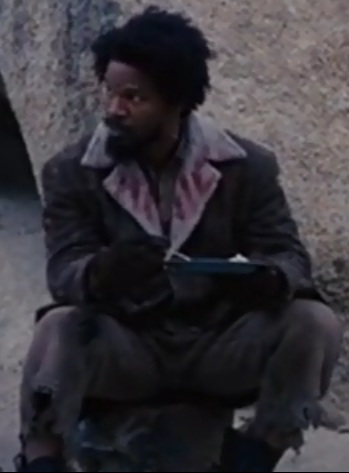
staxwax said: The more I think about this the more outrageous it seems to me - and the more puzzled I am by the positive reception, and the fact that it was able to be made at all.
Have you ever thought that maybe...juuuuust maybe....you're the most intelligent, most sane and most reasonable person in the whooooole wide world?? I mean, that would certainly help you accept come to terms with your confusion and dismay.
Have you ever thought that maybe...juuuuust maybe....you're the most intelligent, most sane and most reasonable person in the whooooole wide world?? I mean, that would certainly help you accept come to terms with your confusion and dismay.
staxwax said:tripledouble said:staxwax said:tripledouble said:staxwax said:Whats your opinion on the slavery exploitation comedy schtick in Django? what was the comedy shtick?
The scenes depicting interactions between slaves and slave traders and masters are nearly all played for comic effect - right from the opening where Schultz frees Django and then throws the other slaves the key offering them a choice: follow the north star of carry the traders home - followed by their grateful shooting of the trader, is played as a joke, the outfit Django picks for himself when he is given free choice of what to wear - resulting in a flashy, garish and ridiculous choice, the scene with the Klansmen and their hoods - which drags on and isn't very funny to begin with, right down to the dialogue between Dicaprio and Jackson - the plantation is called Candieland!- the characterization of practically all the southern whites as monsters, the Mandingo fighting league (of which there is no historical record) - all combined they boil down to an outright caricature of slavery - served up for comic effect, and a few poorly staged shoot outs. No prob?
thanks for the definition! :roll:
I wasn't trying to be smarmy there - just looking at the definition of the word makes it impossible to see Django Unchained as anything but a caricature of slavery, and its protagonists as caricatures of people effecting and affected by slavery. I posted that definition to enforce my point that Django Unchained is a caricature designed for sensationalist purposes. The more I think about this the more outrageous it seems to me - and the more puzzled I am by the positive reception, and the fact that it was able to be made at all.
tripledouble said:
i cant disagree with you about it being a caricature. it is in fact fiction and not a documentary.though you may be exaggerating the comedic effect .
A caricature always has comic intent - and by and large all of Tarantino's film have cynical humor as a trade mark - which makes his tackling of the persecution of jews in Inglorious Basterds and slavery in Django Unchained even more galling.
tripledouble said:...the german's dialogue in general is deliberately clever and entertaining. i didnt see the first scene as comedic unless you are equating revenge with comedy )i dont know why youd do that). the german is very methodical and gets his man...i didnt see the key toss or revenge as a joke. i didnt really know the story or character, so i wasnt even sure what his agenda was, he was shooting people in the head and buying slaves, that didnt exactly spell goodguy to me. django doesnt turn around and smile or laugh. hes got a serious as shit expression on his face.
The theatre I saw it in reacted with laughter to the killing of the surviving trader by the just freed slaves. The flippant way in which Schultz offers the other slaves - after casually killing and wounding the slave traders - a choice, and leaves it up to them to act as they see fit - resulting predictably in a murderous outcome - is a cynical joke imo. Schultz implies there's only one thing for them to do - so the choice hes offering is belittling. Also - following the north star to freedom is a ridiculous over simplification and one that immediately sets the tone of absurd implications and historical inaccuracies- escaped slaves were far from save in the north at that time. For instance the draft riots in new york city occurred in 1863 as a reaction to Lincoln/congress passing the draft and saw murderous mobs going after the cities black population resulting in many lynchings and the burning of a black orphanage.
tripledouble said:...the outfit is definitely a joke. is that necessarily clowning slavery? might be more a reference and dig at the stereotypical flamboyant black pimp.
So he's taking a dig at Django - the hero and main character - framing him as a 'stereotypical black pimp' - why? Django is a freed slave out for revenge - why clown him and have him make ill informed garish pimpish wardrobe choices? its clowning Django the freed slave who i suppose we are expected to root for as an agent of black vengeance against slavery - a weird mixed message.
tripledouble said:...klansmen hood troubles is definitely a joke, casting them as inept clowns. does that make light of slavery? does the dogs ripping up the runaway make light of slavery? does women getting whipped? he said in interviews that the realities were much more horrible. should he have gone further and depicted that?
The Klan were deadly serious and murderous - they weren't jokers fumbling around with their hoods - similarly so were the nazis - so trivialising and portraying klansmen - or nazis for that matter - as bumbling buffoons - is making light of who they actually were in reality - and what they did. In the context of Django its another caricature and comic stroke setting the tone - resulting in an overall comedic take on slavery and its agents.
tripledouble said:...how is mandingo fighting played for comedic effect? that shit was horrifying. were you or your friends laughing? whether its real or not is another question. would you have rather QT substitute something as equally revolting as rape of slaves because it was more realistic?
Candie is one of the main bad guys in Django - hes so bad, mainly - because of his mandingo fighting stable and trade - but in actuality - there was no mandingo fighting as suggested in the movie - it makes it hard to see him as anything else but what he is - a campy fictitious character doing preposterous things - so who is Django really fighting - a ridiculous glib caricature of white racism reveling in black on black fights to the death, staged in a lounge with beethoven playing in the background? Its so off the wall that it becomes laughable - as violence in movies often does.
The whole mandingo warrior fighting trade makes Candieland - still cant get over that name- a preposterous distortion of what really went on on plantations - is QT referencing boxing or modern sports? - In the end its so ott that Im not at all horrified at that scene - its just another violent set piece in the movie- with graphic violent sensationalism - putting out eyes - being served up as entertainment.
Its a sick joke employed to demonise a campy slave owner who in fact should need no such demonising. QT is also referencing one of his favorite low budget exploitation flicks - 'Mandingo' from 1976 - so its also a 'clever' QT reference to a much reviled semi erotic low budget exploitation flick - it just makes it impossible for me to take the mechanics at work in the Django plot at all seriously - that scene is just adding more and more layers of grotesque sensationalism.
tripledouble said:...again, by casting southern whites as monsters, im not sure how that is played for comedic effect. its a two hour spaghetti western, do you want him to cover the abolitionist movement? was candie's sister a monster? i think it showed the degree of complicity and participation in slavery by people living in the south around plantations. was the barkeeper a monster by calling the sheriff? do you think things were less monstrously segregated after emancipation?
Its distorting and trivialising what really went on - almost all the southern whites are monstrous buffoons - so QT is setting up a scene where Django can just blow them away and we can laugh it off - which is exactly what happens in theatres when the audience cheers django on shooting those characters in that final shoot out - the shot of candies sisters flying off is definitely a visual joke intended to cause laughs - which it did when i saw it with an audience. In that sense I see them as 'one dimensional monsters' entering the stage so they can later be dispatched for comedic effect, kneecapping them - shooting them in the nuts, etc.
tripledouble said:...and sure the dialog between jackson and dicaprio was fucked up and uncomfortable. especially the hercules part. but i think it was intentional. i found it interesting that when jackson summons him to the study, he's drinking cognac and his tone changes entirely. the shuck and jive act was all a facade, as both characters were well aware. sam jackson was really a trusted adviser who still had to keep up appearances. i found that interesting and not comedic. anyway, the shucking and jiving was far from comedic in my eyes and i didnt think it was intended to be. jackson was the insiduous house negro whose actions and outlook had been completely warped and twisted to fall in line with his enslavers the jackson character - the facial expressions and body language were really playing up a shucking and jiving uncle tom archetype imo - it caused eye rolling, nudging and pretty much disbelief in the company i saw the movie with. In all - another layer of gross caricature on top of all the others on display in the movie.
tripledouble said:so im not trying to tear down your theory, but i think saying that slavery was used for comedic effect is a bit off. fiction is a caricature, sure. and a spaghetti western is going to simplify characters, events, and history. but i think that for the most part of the film, QT did not shy away from casting slavery as a brutal, horrifying, demeaning institution
i dont believe you can treat slavery as a vehicle or setting for an out and out sensationalist violent caricature laden with jokes on one hand - and at the same time be saying - this is a serious depiction of the horrors of slavery - it doesnt fly in my book.
Anyway- thanks for taking the time to respond like you did - anyone is free to interpret the film the way they want, obviously, there's no obligation to be outraged or insulted. The overt violence and constant use of the the word 'nigger' didn't bother me at all, for instance - although it seems those are the aspects of the film most objected to, generally speaking. I don't believe Tarantino is a racist either, for the record.
if you look at Tarantino's films h always does things out of the norm. Reservoir Dogs is a heist movie where you don't actually see the heist happen. You see the aftermath of the job and one of the robbers bleeeding from the gut because he was shot. The film is actually as long as it takes for someone to bleed from such an injury. There's also a scene where a bunch of crooks are sitting around planning their job and they are given "code" names in the form of colors. Obviously this is a stretch, too, but I don't believe it takes away from the over all appeal of the movie.
Tarantino's films are always over the top. That's part of what he does, his "sound," so to speak. This is something he confesses came from reading Elmore Leonard novels. I'm not sure how many of you are familiar with Leonard's work, but he admits to having a "sound" as well. And that is why I like Tarantino, I suppose. Like him or hate him, his movies all have a certain voice that few writer/directors are able to capture, and in my opinion, that's what makes him so unique.
i enjoyed reading everyone's repsonses, positive and negative, of Django. And the negative reviews on here certainly bring up some valid points.
The scenes depicting interactions between slaves and slave traders and masters are nearly all played for comic effect - right from the opening where Schultz frees Django and then throws the other slaves the key offering them a choice: follow the north star of carry the traders home - followed by their grateful shooting of the trader, is played as a joke, the outfit Django picks for himself when he is given free choice of what to wear - resulting in a flashy, garish and ridiculous choice, the scene with the Klansmen and their hoods - which drags on and isn't very funny to begin with, right down to the dialogue between Dicaprio and Jackson - the plantation is called Candieland!- the characterization of practically all the southern whites as monsters, the Mandingo fighting league (of which there is no historical record) - all combined they boil down to an outright caricature of slavery - served up for comic effect, and a few poorly staged shoot outs. No prob?
car??i??ca??ture (kr-k-chr, -chr)
n.
1.
a. A representation, especially pictorial or literary, in which the subject's distinctive features or peculiarities are deliberately exaggerated to produce a comic or grotesque effect.
b. The art of creating such representations.
2. A grotesque imitation or misrepresentation:
thanks for the definition! :roll:
I wasn't trying to be smarmy there - just looking at the definition of the word makes it impossible to see Django Unchained as anything but a caricature of slavery, and its protagonists as caricatures of people effecting and affected by slavery. I posted that definition to enforce my point that Django Unchained is a caricature designed for sensationalist purposes. The more I think about this the more outrageous it seems to me - and the more puzzled I am by the positive reception, and the fact that it was able to be made at all.
tripledouble said:
i cant disagree with you about it being a caricature. it is in fact fiction and not a documentary.though you may be exaggerating the comedic effect .
A caricature always has comic intent - and by and large all of Tarantino's film have cynical humor as a trade mark - which makes his tackling of the persecution of jews in Inglorious Basterds and slavery in Django Unchained even more galling.
tripledouble said:...the german's dialogue in general is deliberately clever and entertaining. i didnt see the first scene as comedic unless you are equating revenge with comedy )i dont know why youd do that). the german is very methodical and gets his man...i didnt see the key toss or revenge as a joke. i didnt really know the story or character, so i wasnt even sure what his agenda was, he was shooting people in the head and buying slaves, that didnt exactly spell goodguy to me. django doesnt turn around and smile or laugh. hes got a serious as shit expression on his face.
The theatre I saw it in reacted with laughter to the killing of the surviving trader by the just freed slaves. The flippant way in which Schultz offers the other slaves - after casually killing and wounding the slave traders - a choice, and leaves it up to them to act as they see fit - resulting predictably in a murderous outcome - is a cynical joke imo. Schultz implies there's only one thing for them to do - so the choice hes offering is belittling. Also - following the north star to freedom is a ridiculous over simplification and one that immediately sets the tone of absurd implications and historical inaccuracies- escaped slaves were far from save in the north at that time. For instance the draft riots in new york city occurred in 1863 as a reaction to Lincoln/congress passing the draft and saw murderous mobs going after the cities black population resulting in many lynchings and the burning of a black orphanage.
tripledouble said:...the outfit is definitely a joke. is that necessarily clowning slavery? might be more a reference and dig at the stereotypical flamboyant black pimp.
So he's taking a dig at Django - the hero and main character - framing him as a 'stereotypical black pimp' - why? Django is a freed slave out for revenge - why clown him and have him make ill informed garish pimpish wardrobe choices? its clowning Django the freed slave who i suppose we are expected to root for as an agent of black vengeance against slavery - a weird mixed message.
tripledouble said:...klansmen hood troubles is definitely a joke, casting them as inept clowns. does that make light of slavery? does the dogs ripping up the runaway make light of slavery? does women getting whipped? he said in interviews that the realities were much more horrible. should he have gone further and depicted that?
The Klan were deadly serious and murderous - they weren't jokers fumbling around with their hoods - similarly so were the nazis - so trivialising and portraying klansmen - or nazis for that matter - as bumbling buffoons - is making light of who they actually were in reality - and what they did. In the context of Django its another caricature and comic stroke setting the tone - resulting in an overall comedic take on slavery and its agents.
tripledouble said:...how is mandingo fighting played for comedic effect? that shit was horrifying. were you or your friends laughing? whether its real or not is another question. would you have rather QT substitute something as equally revolting as rape of slaves because it was more realistic?
Candie is one of the main bad guys in Django - hes so bad, mainly - because of his mandingo fighting stable and trade - but in actuality - there was no mandingo fighting as suggested in the movie - it makes it hard to see him as anything else but what he is - a campy fictitious character doing preposterous things - so who is Django really fighting - a ridiculous glib caricature of white racism reveling in black on black fights to the death, staged in a lounge with beethoven playing in the background? Its so off the wall that it becomes laughable - as violence in movies often does.
The whole mandingo warrior fighting trade makes Candieland - still cant get over that name- a preposterous distortion of what really went on on plantations - is QT referencing boxing or modern sports? - In the end its so ott that Im not at all horrified at that scene - its just another violent set piece in the movie- with graphic violent sensationalism - putting out eyes - being served up as entertainment.
Its a sick joke employed to demonise a campy slave owner who in fact should need no such demonising. QT is also referencing one of his favorite low budget exploitation flicks - 'Mandingo' from 1976 - so its also a 'clever' QT reference to a much reviled semi erotic low budget exploitation flick - it just makes it impossible for me to take the mechanics at work in the Django plot at all seriously - that scene is just adding more and more layers of grotesque sensationalism.
tripledouble said:...again, by casting southern whites as monsters, im not sure how that is played for comedic effect. its a two hour spaghetti western, do you want him to cover the abolitionist movement? was candie's sister a monster? i think it showed the degree of complicity and participation in slavery by people living in the south around plantations. was the barkeeper a monster by calling the sheriff? do you think things were less monstrously segregated after emancipation?
Its distorting and trivialising what really went on - almost all the southern whites are monstrous buffoons - so QT is setting up a scene where Django can just blow them away and we can laugh it off - which is exactly what happens in theatres when the audience cheers django on shooting those characters in that final shoot out - the shot of candies sisters flying off is definitely a visual joke intended to cause laughs - which it did when i saw it with an audience. In that sense I see them as 'one dimensional monsters' entering the stage so they can later be dispatched for comedic effect, kneecapping them - shooting them in the nuts, etc.
tripledouble said:...and sure the dialog between jackson and dicaprio was fucked up and uncomfortable. especially the hercules part. but i think it was intentional. i found it interesting that when jackson summons him to the study, he's drinking cognac and his tone changes entirely. the shuck and jive act was all a facade, as both characters were well aware. sam jackson was really a trusted adviser who still had to keep up appearances. i found that interesting and not comedic. anyway, the shucking and jiving was far from comedic in my eyes and i didnt think it was intended to be. jackson was the insiduous house negro whose actions and outlook had been completely warped and twisted to fall in line with his enslavers the jackson character - the facial expressions and body language were really playing up a shucking and jiving uncle tom archetype imo - it caused eye rolling, nudging and pretty much disbelief in the company i saw the movie with. In all - another layer of gross caricature on top of all the others on display in the movie.
tripledouble said:so im not trying to tear down your theory, but i think saying that slavery was used for comedic effect is a bit off. fiction is a caricature, sure. and a spaghetti western is going to simplify characters, events, and history. but i think that for the most part of the film, QT did not shy away from casting slavery as a brutal, horrifying, demeaning institution
i dont believe you can treat slavery as a vehicle or setting for an out and out sensationalist violent caricature laden with jokes on one hand - and at the same time be saying - this is a serious depiction of the horrors of slavery - it doesnt fly in my book.
Anyway- thanks for taking the time to respond like you did - anyone is free to interpret the film the way they want, obviously, there's no obligation to be outraged or insulted. The overt violence and constant use of the the word 'nigger' didn't bother me at all, for instance - although it seems those are the aspects of the film most objected to, generally speaking. I don't believe Tarantino is a racist either, for the record.
if you look at Tarantino's films h always does things out of the norm. Reservoir Dogs is a heist movie where you don't actually see the heist happen. You see the aftermath of the job and one of the robbers bleeeding from the gut because he was shot. The film is actually as long as it takes for someone to bleed from such an injury. There's also a scene where a bunch of crooks are sitting around planning their job and they are given "code" names in the form of colors. Obviously this is a stretch, too, but I don't believe it takes away from the over all appeal of the movie.
Tarantino's films are always over the top. That's part of what he does, his "sound," so to speak. This is something he confesses came from reading Elmore Leonard novels. I'm not sure how many of you are familiar with Leonard's work, but he admits to having a "sound" as well. And that is why I like Tarantino, I suppose. Like him or hate him, his movies all have a certain voice that few writer/directors are able to capture, and in my opinion, that's what makes him so unique.
i enjoyed reading everyone's repsonses, positive and negative, of Django. And the negative reviews on here certainly bring up some valid points.
i agree with JATX about the valid points being dropped and maybe a little with Herm about Staxwax being too damn smart.
for real tho, stax, i appreciate your takes, but i still think some of it is reaching at times and at other times chooses not to dig deep enough. jackson's shucking and jivin is coupled with his sherlock holmes impression in the study, where he is obviously more astute than dicaprio. this has to be taken as a whole. gross caricature? maybe. you dont think blacks acted one way in front of whites under slavery and acted different outside of that public eye? (shit, this still happens). the voice, the shuffling, even the deference was ALL out the window when jackson and leo parlayed in the study. the house negro who "buys in" is a classic stereotypical plantation figure, not always grasped by whites, but hated and reviled by african americans. QT and SJ presented this well and left a lot of room for discussion and analysis of that type of relationship. the willingness of the slave to emotionally invest in the master's game whether through opportunism or some stockholm syndrome shit.
for real tho, stax, i appreciate your takes, but i still think some of it is reaching at times and at other times chooses not to dig deep enough. jackson's shucking and jivin is coupled with his sherlock holmes impression in the study, where he is obviously more astute than dicaprio. this has to be taken as a whole. gross caricature? maybe. you dont think blacks acted one way in front of whites under slavery and acted different outside of that public eye? (shit, this still happens). the voice, the shuffling, even the deference was ALL out the window when jackson and leo parlayed in the study. the house negro who "buys in" is a classic stereotypical plantation figure, not always grasped by whites, but hated and reviled by african americans. QT and SJ presented this well and left a lot of room for discussion and analysis of that type of relationship. the willingness of the slave to emotionally invest in the master's game whether through opportunism or some stockholm syndrome shit.
Similar threads

- Replies
- 82
- Views
- 6K


- Replies
- 27
- Views
- 3K