
current film strut
- Thread starter ketan
- Start date
You are using an out of date browser. It may not display this or other websites correctly.
You should upgrade or use an alternative browser.
You should upgrade or use an alternative browser.


CRABFUNK said:
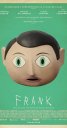
Hardly current but I keep coming back to Frank for some reason or other. I think it contians some basic truths that are not intuitive or expected. Anyone else into this one?
I liked the film, he's obviously more a tragic character in the film but as long as you know the distinction it's all good.My brother worked on a TV show that the real Frank did a regular guest-spot on. I was in the audience a few times. I remember he (as Frank) wore these white jeans with tons of small biro-written messages on them, which he never stood still long enough for me to read properly, but it reminded me of all the scribblings you see 24-carat nutters make on their prison walls or in skin-bound journals. His humour was pretty nuanced though... He opened for the Spice Girls at one big gig and started with:
"Scream if you love [insert name of Spice Girl here]!" (cue massive screams from crowd)"Scream if you love [insert name of next Spice Girl here]!" (cue massive screams from crowd)
"Scream if you've got Betamax!"... (crickets
 ).... "I've got Betamax and wondered if anyone wanted to swap films with me."I mean, that takes balls.He (Chris IRL) was a completely different person without the mask - I mean, very regular, you would never know he was Frank unless you knew. My brother used to sit with him in the studio canteen sometimes and they would chat about art and how shit the tea was, but he wasn't one of these always "ON" people like you'd imagine Jim Carrey or peak Robin Williams to be.
Saw this recently.
Cinematography is excellent. Really makes you feel stuck with them and suicidal. Sooo... not entertaining, as such. But, gripped. Like the wanking doll.
Sea-dog saltiness : MOST SALINOUS
Did the conclusion make me feel robbed of my time and in the mood to throw a Chinese takeway at the telly?


I felt much of the same, and remain in awe of this one. Wondering if I'll ever want to watch it again on the one hand, but so "glad" I saw it because it's like being on a very long roller coaster.
I actually saw this in the theatre when i was on my own traveling for work. I love a good spliff before a good film, but I was running late for the screening and I managed to inhale perhaps a bit too much, too quickly before going inside and getting settled, and I had a weird psychological/physiological reaction that I've only had two other times in my life with the lettuce. So, for the first 20-odd minutes of the film I was essentially paralyzed in my seat and panicking about whether I was actually breathing enough to survive (I was; it was paranoia). My physical situation mellowed out pretty quickly but the paranoia sort of lingered becuase of how GRIPPING the dialogue/visuals are. It was like a 4-D movie for me, in that way.
Did the conclusion make me feel robbed of my time and in the mood to throw a Chinese takeway at the telly?
It was such an intense viewing that I felt a form of... um... release by the ending. I'll leave now.
I actually saw this in the theatre when i was on my own traveling for work. I love a good spliff before a good film, but I was running late for the screening and I managed to inhale perhaps a bit too much, too quickly before going inside and getting settled, and I had a weird psychological/physiological reaction that I've only had two other times in my life with the lettuce. So, for the first 20-odd minutes of the film I was essentially paralyzed in my seat and panicking about whether I was actually breathing enough to survive (I was; it was paranoia). My physical situation mellowed out pretty quickly but the paranoia sort of lingered becuase of how GRIPPING the dialogue/visuals are. It was like a 4-D movie for me, in that way.
Did the conclusion make me feel robbed of my time and in the mood to throw a Chinese takeway at the telly?
It was such an intense viewing that I felt a form of... um... release by the ending. I'll leave now.
Jimster said:
He (Chris IRL) was a completely different person without the mask - I mean, very regular, you would never know he was Frank unless you knew. My brother used to sit with him in the studio canteen sometimes and they would chat about art and how shit the tea was, but he wasn't one of these always "ON" people like you'd imagine Jim Carrey or peak Robin Williams to be.
Cool. Sidebottom never really made it here (He was anti-comedy before that was even a thing), but that head is iconic. What is his connection with this movie?
The humor of the OG Frank was definitely Manchester/NW-Related so possibly wouldn't have travelled well anyway, unless you could relate. Even then, it was like a surrealist take on it.
Without googling, IIRC one of his old bandmembers (before Frank, Chris was an underground muso of sorts) got into screenwriting and/or filmmaking and the Frank Movie was supposed to be a kind of salute to their madcap days of old, before the idea morphed into something on a parallel timeline. I can't remember if the OG Frank died before this was made so it could have also been part tribute.
The OG Frank/Chris died of cancer unfortunately.
Without googling, IIRC one of his old bandmembers (before Frank, Chris was an underground muso of sorts) got into screenwriting and/or filmmaking and the Frank Movie was supposed to be a kind of salute to their madcap days of old, before the idea morphed into something on a parallel timeline. I can't remember if the OG Frank died before this was made so it could have also been part tribute.
The OG Frank/Chris died of cancer unfortunately.

CRABFUNK said:
Hardly current but I keep coming back to Frank for some reason or other. I think it contians some basic truths that are not intuitive or expected. Anyone else into this one?
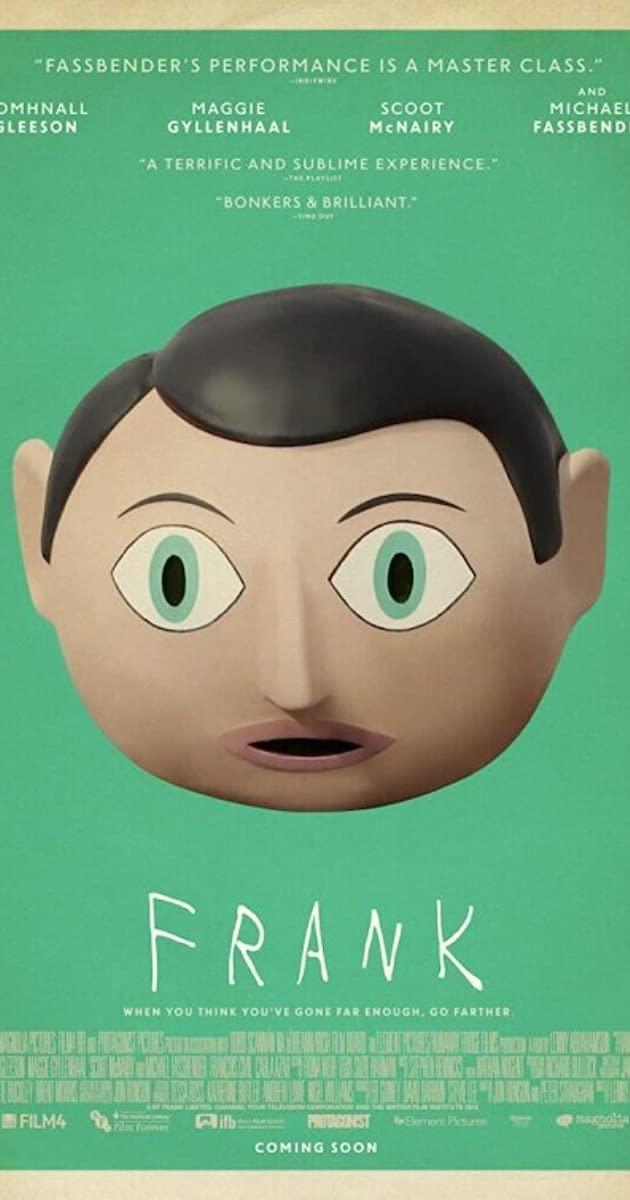
I watched this with my wife and asked her why when the French dude spends the entire film only speaking French, it’s cool, but when I do it with English, it’s post-Imperialistic arrogance LOL.I’m still beyond shit at Catalan, Spanish, and now French.
Fucking great film btw!

"Duderonomy said:
I’m still beyond shit at Catalan, Spanish, and now French."
Don't give up. My goal is Portuguese. This week I saw Sicario 2, as there were no other new movies I haven't seen yet with those dub/sub options on Netflix. What a downer film.
I’m still beyond shit at Catalan, Spanish, and now French."
Don't give up. My goal is Portuguese. This week I saw Sicario 2, as there were no other new movies I haven't seen yet with those dub/sub options on Netflix. What a downer film.

ketan said:not current but i'm going to be watching cache for the 3rd or 4th??th time next week and can't wait to sit down with it again. besides, with France, it's always going to be kind of current... https://www.bbc.com/news/world-africa-56360817 (sorry, not getting political, raj! :shame

Thanks for bringing Caché to my attention. I enjoyed it a lot. What's your theory on who is behind the camera?After marinating on it for a while I came to see this more as a parable and the shot down the street to maybe stand for a changed public and individual awareness making those with blood on their hands nervous and feeling trapped.I read up on the '61 massacre (ca. 200 is the rather "conservative" guesstimate of the true body count) a few years ago and it boggled my mind how something this insane, large scale and traumatic could just have been buried.
Over the past 10 months I did some research about my home area's past during the last 2 years of the 2nd WW and the following French occupation period which was eye opening in more ways than I could count.I was 11 in early 1979 when the Holocaust tv series was aired in Germany which led to intense discussions or rather the intense blocking of those from the side of my 2 nazi grandfathers, one of which was a blacksmith and had held held himself a French prisoner of war as a personal slave. All family members insisted that nothing like this had ever happened in our idyllic Black Forest. I can't get too deep into this but none or only very small parts of this shit were ever known to me or any of my older friends who grew up in the same area. I counted more than a dozen concentration camps in a 40 mile radius around my village and found out that the nearest town, about 6 miles away, was where some of the the last survivors of a death march from a camp built in and around an underground wunderwaffen factory had been massacred in an open field and buried in a mass grave. Too much crazy shit to mention here but yes, Caché definitely hit the spot for me.


Having just watched The Battle of Algiers for the first time (to my shame), Caché now has a much stronger context to me, though I loved it before with only my dim knowledge of the independence struggle. I consume a greater than average amount of French media and Caché is literally the only time I ever heard about the Paris massacre without seeking it out myself... it is most definitely buried. I took it as a parable too - for guilt with getting away with it, maybe. People love to pretend the past doesn't affect anything when they've benefited.
It's interesting finding out what family history gets buried - I've got family from the American South, mostly poor backgrounds - my mom has suspicions that some on her side could've been in the Klan in the early 20th century. My dad has been researching some blank spots in our family past. His dad was adopted and he found the biological mother, who gave him up as a baby. We'd assumed it was a teenage shame pregnancy and so on, but she seemed to have been pretty liberated for the 1920s and lived what seemed to be a pretty modern and full life after it. Looking at the adoption papers, though, which presumably somebody in the family has always had, the adopting couple, the family I get my name from, made some explicit requests for "no Greek or Jewish ancestry" to the agency. They even kinda tried to justify it in their cover letter with a sort of "we just want the baby to look like us, this isn't a race thing". I mean that stuff directly leads to who I am. I felt awkward being the one family member to point out that stuff when we looked at all the documents. Dead silence until I couched it in "hey the '20s were the height of Klan membership, it could've been worse!"
It's no mass grave but people get really uncomfortable even with stuff like that. I can only imagine the postwar generations in Germany grappling with the long shadow of Nazism.
It's interesting finding out what family history gets buried - I've got family from the American South, mostly poor backgrounds - my mom has suspicions that some on her side could've been in the Klan in the early 20th century. My dad has been researching some blank spots in our family past. His dad was adopted and he found the biological mother, who gave him up as a baby. We'd assumed it was a teenage shame pregnancy and so on, but she seemed to have been pretty liberated for the 1920s and lived what seemed to be a pretty modern and full life after it. Looking at the adoption papers, though, which presumably somebody in the family has always had, the adopting couple, the family I get my name from, made some explicit requests for "no Greek or Jewish ancestry" to the agency. They even kinda tried to justify it in their cover letter with a sort of "we just want the baby to look like us, this isn't a race thing". I mean that stuff directly leads to who I am. I felt awkward being the one family member to point out that stuff when we looked at all the documents. Dead silence until I couched it in "hey the '20s were the height of Klan membership, it could've been worse!"
It's no mass grave but people get really uncomfortable even with stuff like that. I can only imagine the postwar generations in Germany grappling with the long shadow of Nazism.
klezmer electro-thug beats said:
Having just watched The Battle of Algiers for the first time (to my shame), Caché now has a much stronger context to me, though I loved it before with only my dim knowledge of the independence struggle. I consume a greater than average amount of French media and Caché is literally the only time I ever heard about the Paris massacre without seeking it out myself... it is most definitely buried. I took it as a parable too - for guilt with getting away with it, maybe. People love to pretend the past doesn't affect anything when they've benefited.
It's interesting finding out what family history gets buried - I've got family from the American South, mostly poor backgrounds - my mom has suspicions that some on her side could've been in the Klan in the early 20th century. My dad has been researching some blank spots in our family past. His dad was adopted and he found the biological mother, who gave him up as a baby. We'd assumed it was a teenage shame pregnancy and so on, but she seemed to have been pretty liberated for the 1920s and lived what seemed to be a pretty modern and full life after it. Looking at the adoption papers, though, which presumably somebody in the family has always had, the adopting couple, the family I get my name from, made some explicit requests for "no Greek or Jewish ancestry" to the agency. They even kinda tried to justify it in their cover letter with a sort of "we just want the baby to look like us, this isn't a race thing". I mean that stuff directly leads to who I am. I felt awkward being the one family member to point out that stuff when we looked at all the documents. Dead silence until I couched it in "hey the '20s were the height of Klan membership, it could've been worse!"
It's no mass grave but people get really uncomfortable even with stuff like that. I can only imagine the postwar generations in Germany grappling with the long shadow of Nazism.
Thank you for this, you almost made me do what I've always been good at; derail a thread on Soulstrut. But the post proved too long so I put it up on facebook instead.Now where's a butthurt gremlin when you really need it?
Frank said:
ketan said:not current but i'm going to be watching cache for the 3rd or 4th??th time next week and can't wait to sit down with it again. besides, with France, it's always going to be kind of current... https://www.bbc.com/news/world-africa-56360817 (sorry, not getting political, raj! :shame
Thanks for bringing Caché to my attention. I enjoyed it a lot. What's your theory on who is behind the camera?After marinating on it for a while I came to see this more as a parable and the shot down the street to maybe stand for a changed public and individual awareness making those with blood on their hands nervous and feeling trapped.I read up on the '61 massacre (ca. 200 is the rather "conservative" guesstimate of the true body count) a few years ago and it boggled my mind how something this insane, large scale and traumatic could just have been buried.
Over the past 10 months I did some research about my home area's past during the last 2 years of the 2nd WW and the following French occupation period which was eye opening in more ways than I could count.I was 11 in early 1979 when the Holocaust tv series was aired in Germany which led to intense discussions or rather the intense blocking of those from the side of my 2 nazi grandfathers, one of which was a blacksmith and had held held himself a French prisoner of war as a personal slave. All family members insisted that nothing like this had ever happened in our idyllic Black Forest. I can't get too deep into this but none or only very small parts of this shit were ever known to me or any of my older friends who grew up in the same area. I counted more than a dozen concentration camps in a 40 mile radius around my village and found out that the nearest town, about 6 miles away, was where some of the the last survivors of a death march from a camp built in and around an underground wunderwaffen factory had been massacred in an open field and buried in a mass grave. Too much crazy shit to mention here but yes, Caché definitely hit the spot for me.
That's a heavy history - and that's the thing about war, there are "winner" and "losers" but even the winners have to deal with the fall out eventually.
*Spoilers* I haven't watched Cache in at least a decade, and I know that I was never fully satisfied with my explanation (vis a vis the details on the screen). But I remember seeing it as about how well-meaning upper middle class French people have a way of talking about things the right way but not fully reckoning with the privileges they have enjoyed due to France's history of colonization. I think I felt like it wasn't the older man because the impact of colonization on him was more immediate trauma and, well, you know what happens to him. But the younger generation both understands the history of colonization clearly, can clearly see the injustice of the status quo (intergenerational trauma), and have the rest of their lives ahead of them; so they're watching, and things could get hectic if the status quo doesn't change. I'm actually watching this tonight and discussing it with a group of students tomorrow - and those discussions are always illuminating, so I'll circle back with a newer answer. I can see how today, there's much more "wokeness" (i hate that term) out there, but how deep is that understanding? And clearly a large amount of people still aren't willing to see the past and present from another perspective. So I expect Cache will remain highly relevant for some time....By the way, these are some great quotes from Haneke about his films that suggest it's really more about what YOU see in it.Michael Haneke: “I always say that a film is like a
ski jump. The film constructs the jump and enables the spectator to jump. It's
up to each member of the audience to jump, and they're all going to jump
differently. I create tension. I raise certain questions. That's my intention,
but it's to give the audience a chance to respond.
The film ends in the head of the
viewer, not on the screen.”Andrew O'Hehir:
On the simplest level, you want to leave us asking: What happens next? What
will the events we have seen lead to, and how do we think about
them?
Michael Haneke: Yes, and why? Why do things happen like this? Everybody has
to
find his own explanation.---"It's important to always try to tell a story in a way where there are several credible possible explanations. Explanations that can be totally contradictory!"-- Michael Haneke

klezmer electro-thug beats said:
Having just watched The Battle of Algiers for the first time (to my shame), Caché now has a much stronger context to me, though I loved it before with only my dim knowledge of the independence struggle. I consume a greater than average amount of French media and Caché is literally the only time I ever heard about the Paris massacre without seeking it out myself... it is most definitely buried. I took it as a parable too - for guilt with getting away with it, maybe. People love to pretend the past doesn't affect anything when they've benefited.
It's interesting finding out what family history gets buried - I've got family from the American South, mostly poor backgrounds - my mom has suspicions that some on her side could've been in the Klan in the early 20th century. My dad has been researching some blank spots in our family past. His dad was adopted and he found the biological mother, who gave him up as a baby. We'd assumed it was a teenage shame pregnancy and so on, but she seemed to have been pretty liberated for the 1920s and lived what seemed to be a pretty modern and full life after it. Looking at the adoption papers, though, which presumably somebody in the family has always had, the adopting couple, the family I get my name from, made some explicit requests for "no Greek or Jewish ancestry" to the agency. They even kinda tried to justify it in their cover letter with a sort of "we just want the baby to look like us, this isn't a race thing". I mean that stuff directly leads to who I am. I felt awkward being the one family member to point out that stuff when we looked at all the documents. Dead silence until I couched it in "hey the '20s were the height of Klan membership, it could've been worse!"
It's no mass grave but people get really uncomfortable even with stuff like that. I can only imagine the postwar generations in Germany grappling with the long shadow of Nazism.
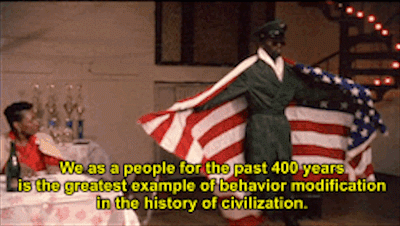
Again, that's pretty heavy - and I never tire from the realization of how long human history is, and therefore how recent and highly relevant to the present the events of the last few hundred years are. This quote from Paris is Burning stays relevant:
klezmer electro-thug beats said:
It's interesting finding out what family history gets buried - I've got family from the American South, mostly poor backgrounds - my mom has suspicions that some on her side could've been in the Klan in the early 20th century. My dad has been researching some blank spots in our family past. His dad was adopted and he found the biological mother, who gave him up as a baby. We'd assumed it was a teenage shame pregnancy and so on, but she seemed to have been pretty liberated for the 1920s and lived what seemed to be a pretty modern and full life after it. Looking at the adoption papers, though, which presumably somebody in the family has always had, the adopting couple, the family I get my name from, made some explicit requests for "no Greek or Jewish ancestry" to the agency. They even kinda tried to justify it in their cover letter with a sort of "we just want the baby to look like us, this isn't a race thing". I mean that stuff directly leads to who I am. I felt awkward being the one family member to point out that stuff when we looked at all the documents. Dead silence until I couched it in "hey the '20s were the height of Klan membership, it could've been worse!"
My father's family are from the South. Dirt poor. For his school vacations, my dad picked cotton every summer. Didn't own a pair of shoes until a pair had gone through his two older brothers first. One meal a day for most of his childhood. My grandmother probably had some kind of mixed-race ancestry. She had really high cheek bones, very thick, frizzy hair, and a massive ass. My father, rest his MAGA soul, would try and pass it off as possibly being Cherokee blood. I think the reality is probably black blood (this is Mississippi after all), but all of my family on that side are so hardcore racist that's not something I would even say out loud to them LOL.
Frank said:
I just watched this today and liked it a lot.Just read a blurb on this and it looks great, will seek it out.
I just watched this today and liked it a lot.Just read a blurb on this and it looks great, will seek it out.

Similar threads

- Replies
- 6
- Views
- 5K

- Replies
- 1
- Views
- 990


- Replies
- 13
- Views
- 2K