Diplo - Blackberry Commercial
- Thread starter RAJ
- Start date
You are using an out of date browser. It may not display this or other websites correctly.
You should upgrade or use an alternative browser.
You should upgrade or use an alternative browser.

TITLE: Down in the Village
ARTIST: Curtis Knight
LABEL: Paramount, 1972

ARTIST: Curtis Knight
LABEL: Paramount, 1972
Man, everyone I try and hip this record too just spits in my face and tells me its wack. They must be listening to it backwards or something. Dont worry, thats the last time I turn you onto anything you ungrateful punk.. I got this while wondering North Philly in search of these top secret society flea markets. All I found was the underground Pokeman railroad. This scary little sign led me down in a basement of a warehouse in the Northeast. There were mad booths and neon lights but no customers except me. I thought I was in some Thai sex slave emporium.. I wondered and peeked my head into some curtained stall (all the hot flea market shit gotta be curtained up.) I saw a couple crates of records laying in puddles. This scary guy comes up and sees me eyeing his moldy ass water brain damaged lps and he said "these all start at 15 dollars, Beatles is 25." You know about these types right?.. He fucked up, so I just stole this Curtis Knight lp (which was sealed) when he went to get a corndog. The only problem is that there just was only one entrance (staircase) and it took me an hour of laying low in the back of the flea looking like ET between dusty stained stuffed creatures and action figure sheets. {I remember peeing on those.} After he downed the corndog and gave up hope of finding (and beating) my ass, I made my escape and drowned out the "HEY STOP!!!"s coming from below the flea dungeon. Yeah this record is tough, really heavy psychadelic. Its like his Flashing LP (with jimi hedrix) on heroin or cocaine or whatever drug a record can be on. It has the nastiest fuzz guitar Ive ever heard. Ever listen to DJ Shadows Theme? This is where he got the drums and fuzzy nasty guitar sound. I think Dibbs looped these drums up on one of his break records too. And Signify put them over a Sun Ra chant on something he did. This is nasty shit, if you cant feel me, then you wack.
bassie said:"...I feel so outrageously authentic at what I do that the question of selling out or not selling out doesn't even enter my head."
I'm not in the least bit mad at that reasoning.
I'm not in the least bit mad at that reasoning.


formadiplos record checks on turntable lab were classic too
i think his mind really functions like his writing by the way
i think his mind really functions like his writing by the way

Pretty much what luck and day said...
Just on the strength of that JPG alone, how can anyone hate on him? That was some OG SoulStrut comedy gold. I remember the eBay descriptions too, pretty entertaining. Not to mention, the couple times I've met him he came off quite genuine. He even said that Meaty (Ogre) inspired him a long time ago...funny to think about, but the dude is cool and he "made it", let him live. As for his music, I can dig some of it (esp Florida and the Hollertronix mixes), some not so much, but I can't knock his hustle.
Just on the strength of that JPG alone, how can anyone hate on him? That was some OG SoulStrut comedy gold. I remember the eBay descriptions too, pretty entertaining. Not to mention, the couple times I've met him he came off quite genuine. He even said that Meaty (Ogre) inspired him a long time ago...funny to think about, but the dude is cool and he "made it", let him live. As for his music, I can dig some of it (esp Florida and the Hollertronix mixes), some not so much, but I can't knock his hustle.
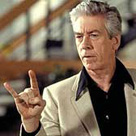

For my part, I give Diplo a pass because I think he makes really interesting records. The rest of this shit is bread and circuses. I'm a record nerd who got on the Diplo train in the turn-of-the-millenium heyday of blazing downtempo, and I always liked his stuff a lot because although I've never been one to think that it's a producer's job to just channel his record collection--I don't listen to sample-based shit from heavy funk 45 dudes or heavy psych record dudes and get all heated when I don't hear walking basslines or lysergic guitar--I do find myself frequently getting disappointed when dudes who spend so much time amassing all these great old records that have so much personality and life finally make their own record and its some bloodless shit that evinces next to no understanding of what it takes to make a record special or give it a little fucking character. Diplo's stuff has, to me, pretty well avoided that pitfall. When I listen to stuff like his"Epistemology" twelve-inch (which I like a whole lot) or on the infrequent occasions when I check his club stuff, even when I don't like what I'm hearing I can tell that I'm listening to someone who knows how to make things sound interesting (I know that "mak[ing] things sound interesting" sounds like some easy, lowered-bar shit, but yo: try it sometime and tell me how it goes) and who knows how to get his cockeyed sensibility across no matter how straight the context. I definitely share Soulhawk's distaste for the cult of personality and for the rubber-stamp GET THAT MONEY, DOG attitude, but I think Diplo is a legitimately interesting artist, one who keeps something creative going in the background (granted, sometimes the deep background) of whatever he's doing, and I'm glad he's making a living off his work.
The best/worst part of that ten-minute video upthread is between like 7:45 and 8:15, with dude in the perceptibly snug t-shirt and flipped-up brim trying in vain to convince Diplo that they have a friend in common; the searching, dejected look on dude's face as he watches Diplo small-talk with people that he actually, you know, knows, as well as the desperate "...he's from Brooklyn?" spoken to Diplo's turned back, right before Diplo ducks inside and dude realizes that the whole thing has been filmed and goes in damage-control mode by sipping his drink with all the fake nonchalance he can muster. I mean, lord knows we've all been there, but damn, does that hurt to watch.
The two noteworthy soulstrut comments about Diplo that I can recall were 1) someone making note of his "red-faced fuckability" and 2) someone getting salty because a faking faker like Diplo had managed to nab such a "fine specimen of femininity" as M.I.A. I'm pretty sure the first one was Bambouche (and I think was followed by Jonny or somebody on some "Damn, dude--I'm trying to eat over here!"), but I can't remember who the second one was.
I also always really liked the subtle little record-nerd "fuck all y'all" of getting the super-pop Kanye to do a drop on whichever volume of AEIOU that was. Great shit. (Tangentially related: at my old job, I was thisclose to getting a Ruth Bader Ginsburg drop--I had her direct number and everything. I never did anything with that, though.)
The best/worst part of that ten-minute video upthread is between like 7:45 and 8:15, with dude in the perceptibly snug t-shirt and flipped-up brim trying in vain to convince Diplo that they have a friend in common; the searching, dejected look on dude's face as he watches Diplo small-talk with people that he actually, you know, knows, as well as the desperate "...he's from Brooklyn?" spoken to Diplo's turned back, right before Diplo ducks inside and dude realizes that the whole thing has been filmed and goes in damage-control mode by sipping his drink with all the fake nonchalance he can muster. I mean, lord knows we've all been there, but damn, does that hurt to watch.
The two noteworthy soulstrut comments about Diplo that I can recall were 1) someone making note of his "red-faced fuckability" and 2) someone getting salty because a faking faker like Diplo had managed to nab such a "fine specimen of femininity" as M.I.A. I'm pretty sure the first one was Bambouche (and I think was followed by Jonny or somebody on some "Damn, dude--I'm trying to eat over here!"), but I can't remember who the second one was.
I also always really liked the subtle little record-nerd "fuck all y'all" of getting the super-pop Kanye to do a drop on whichever volume of AEIOU that was. Great shit. (Tangentially related: at my old job, I was thisclose to getting a Ruth Bader Ginsburg drop--I had her direct number and everything. I never did anything with that, though.)
james said: 2) someone getting salty because a faking faker like Diplo had managed to nab such a "fine specimen of femininity" as M.I.A. I'm pretty sure the first one was Bambouche (and I think was followed by Jonny or somebody on some "Damn, dude--I'm trying to eat over here!"), but I can't remember who the second one was.
That would be me. And here's the back-story. Years ago, Diplo made an appearance on the Jmmy Kimmel show. There was a funny, albeit unfortunate photo of him from the show that had him looking mad gooberish...(I'm one to talk, every other photo of me looks mad gooberish). In the midst of the resident dj yes-men on here worshipping Diplo for making it on network tv, I made a joke about the funny photo. Dudes here took me for serious, so I ran with it. I cited how the time I saw Diplo dj, he was mashing up Ying Yang Twinz with the Bangles...in my mind, watering down the fierceness of stripper bass with 7th grade bobby socks sensibilities. Then I took it further by saying, how could a goober like Diplo score an international stalet like MIA? Never even mentioned within that about how when I interviewed MIA on the phone related to an upcoming SXSW performance, she told me I tripped her out because I sounded on the phone just like Diplo (both born in the Souwf related, I suppose). Anyway, everything I said about Diplo was all in fun. Like you, I actually enjoy much of Diplo's music. I even play that Vybz Kartel track from his first album out from time to time. But fast-forward to this commercial...and again, in fun...I spot an easy target. Cool indeed that dude can play music collector for a living...more power to him. But IMO the commerical rubs that in peoples' faces in kind of a snobby way. No big deal like dude needs to be burned at the stake, but obviously more of a critique than the career dj groupies on here are willing to handle without re-pledging their support for anything an in-dj is able to accomplish industry-wise.
That would be me. And here's the back-story. Years ago, Diplo made an appearance on the Jmmy Kimmel show. There was a funny, albeit unfortunate photo of him from the show that had him looking mad gooberish...(I'm one to talk, every other photo of me looks mad gooberish). In the midst of the resident dj yes-men on here worshipping Diplo for making it on network tv, I made a joke about the funny photo. Dudes here took me for serious, so I ran with it. I cited how the time I saw Diplo dj, he was mashing up Ying Yang Twinz with the Bangles...in my mind, watering down the fierceness of stripper bass with 7th grade bobby socks sensibilities. Then I took it further by saying, how could a goober like Diplo score an international stalet like MIA? Never even mentioned within that about how when I interviewed MIA on the phone related to an upcoming SXSW performance, she told me I tripped her out because I sounded on the phone just like Diplo (both born in the Souwf related, I suppose). Anyway, everything I said about Diplo was all in fun. Like you, I actually enjoy much of Diplo's music. I even play that Vybz Kartel track from his first album out from time to time. But fast-forward to this commercial...and again, in fun...I spot an easy target. Cool indeed that dude can play music collector for a living...more power to him. But IMO the commerical rubs that in peoples' faces in kind of a snobby way. No big deal like dude needs to be burned at the stake, but obviously more of a critique than the career dj groupies on here are willing to handle without re-pledging their support for anything an in-dj is able to accomplish industry-wise.

z_illa said:I apologize. For some reason I thought this thread was about a piece of advertising, not a Diplo appreciation thread.
Well, I mean, only inasmuch as I think one's take on the piece of advertising has a fair amount to do with one's appreciation (or dis-) of what Diplo's doing in the first place.
I see what you're saying, though. Whatever one thinks of Diplo, the existence of this commercial--and the existence of commercials like this--mostly really, really sucks. I guess it's just that for many years now I've felt that keeping something pure and keeping something alive are pretty mutually exclusive in modern culture, which is why Diplo doing this commercial doesn't bother me; I mostly see things like this as facilitators for artistic survival, and thus get far more bothered when no-talents are getting paid off of them. I tend to look at them in romantic terms of bottom-line aesthetic implication ("Doing bullshit like this will enable Artist X to do the Real Shit that I in my heart of hearts know is what he really wants to do") moreso than in terms of commercial insidiousness ("Why must there be this bullshit at all?"). If I feel that the art in question deserves to survive, I tend to let the rest slide.
Which I realize is very nearsighted. It's been the topic of numerous by-myself meetings, and is definitely one of the things I'll work out one day, but probably not here.
Well, I mean, only inasmuch as I think one's take on the piece of advertising has a fair amount to do with one's appreciation (or dis-) of what Diplo's doing in the first place.
I see what you're saying, though. Whatever one thinks of Diplo, the existence of this commercial--and the existence of commercials like this--mostly really, really sucks. I guess it's just that for many years now I've felt that keeping something pure and keeping something alive are pretty mutually exclusive in modern culture, which is why Diplo doing this commercial doesn't bother me; I mostly see things like this as facilitators for artistic survival, and thus get far more bothered when no-talents are getting paid off of them. I tend to look at them in romantic terms of bottom-line aesthetic implication ("Doing bullshit like this will enable Artist X to do the Real Shit that I in my heart of hearts know is what he really wants to do") moreso than in terms of commercial insidiousness ("Why must there be this bullshit at all?"). If I feel that the art in question deserves to survive, I tend to let the rest slide.
Which I realize is very nearsighted. It's been the topic of numerous by-myself meetings, and is definitely one of the things I'll work out one day, but probably not here.
HarveyCanal said:james said: 2) someone getting salty because a faking faker like Diplo had managed to nab such a "fine specimen of femininity" as M.I.A. I'm pretty sure the first one was Bambouche (and I think was followed by Jonny or somebody on some "Damn, dude--I'm trying to eat over here!"), but I can't remember who the second one was.
That would be me. And here's the back-story. Years ago, Diplo made an appearance on the Jmmy Kimmel show. There was a funny, albeit unfortunate photo of him from the show that had him looking mad gooberish...(I'm one to talk, every other photo of me looks mad gooberish). In the midst of the resident dj yes-men on here worshipping Diplo for making it on network tv, I made a joke about the funny photo. Dudes here took me for serious, so I ran with it. I cited how the time I saw Diplo dj, he was mashing up Ying Yang Twinz with the Bangles...in my mind, watering down the fierceness of stripper bass with 7th grade bobby socks sensibilities. Then I took it further by saying, how could a goober like Diplo score an international stalet like MIA? Never even mentioned within that about how when I interviewed MIA on the phone related to an upcoming SXSW performance, she told me I tripped her out because I sounded on the phone just like Diplo (both born in the Souwf related, I suppose). Anyway, everything I said about Diplo was all in fun. Like you, I actually enjoy much of Diplo's music. I even play that Vybz Kartel track from his first album out from time to time. But fast-forward to this commercial...and again, in fun...I spot an easy target. Cool indeed that dude can play music collector for a living...more power to him. But IMO the commerical rubs that in peoples' faces in kind of a snobby way. No big deal like dude needs to be burned at the stake, but obviously more of a critique than the career dj groupies on here are willing to handle without re-pledging their support for anything an in-dj is able to accomplish industry-wise.
Ah, the time-honored Lovitz/Canal Defense:
"AC-TING!"
That would be me. And here's the back-story. Years ago, Diplo made an appearance on the Jmmy Kimmel show. There was a funny, albeit unfortunate photo of him from the show that had him looking mad gooberish...(I'm one to talk, every other photo of me looks mad gooberish). In the midst of the resident dj yes-men on here worshipping Diplo for making it on network tv, I made a joke about the funny photo. Dudes here took me for serious, so I ran with it. I cited how the time I saw Diplo dj, he was mashing up Ying Yang Twinz with the Bangles...in my mind, watering down the fierceness of stripper bass with 7th grade bobby socks sensibilities. Then I took it further by saying, how could a goober like Diplo score an international stalet like MIA? Never even mentioned within that about how when I interviewed MIA on the phone related to an upcoming SXSW performance, she told me I tripped her out because I sounded on the phone just like Diplo (both born in the Souwf related, I suppose). Anyway, everything I said about Diplo was all in fun. Like you, I actually enjoy much of Diplo's music. I even play that Vybz Kartel track from his first album out from time to time. But fast-forward to this commercial...and again, in fun...I spot an easy target. Cool indeed that dude can play music collector for a living...more power to him. But IMO the commerical rubs that in peoples' faces in kind of a snobby way. No big deal like dude needs to be burned at the stake, but obviously more of a critique than the career dj groupies on here are willing to handle without re-pledging their support for anything an in-dj is able to accomplish industry-wise.
Ah, the time-honored Lovitz/Canal Defense:
"AC-TING!"

james said: one of the things I'll work out one day, but probably not here.
Not much to disagree with here. I must also admit to being extremely farsighted in most every discussion I have. Yes it is a facilitator for an artistic survival, and in this case, I really want this artist to succeed. What bothers me when musician x needs to sell cell phones in order to get their music heard. And then do a poor job (in comparison to their music) at selling cell phones. This is unarguably wrong, yet I feel lonelier and lonelier in this stance. Especially the more the artists community suffers. You mean to enact change I will have to give up more? And I won't see any change in my lifetime!?
Not much to disagree with here. I must also admit to being extremely farsighted in most every discussion I have. Yes it is a facilitator for an artistic survival, and in this case, I really want this artist to succeed. What bothers me when musician x needs to sell cell phones in order to get their music heard. And then do a poor job (in comparison to their music) at selling cell phones. This is unarguably wrong, yet I feel lonelier and lonelier in this stance. Especially the more the artists community suffers. You mean to enact change I will have to give up more? And I won't see any change in my lifetime!?


z_illa said:james said: one of the things I'll work out one day, but probably not here.
Not much to disagree with here. I must also admit to being extremely farsighted in most every discussion I have. Yes it is a facilitator for an artistic survival, and in this case, I really want this artist to succeed. What bothers me when musician x needs to sell cell phones in order to get their music heard. And then do a poor job (in comparison to their music) at selling cell phones. This is unarguably wrong, yet I feel lonelier and lonelier in this stance. Especially the more the artists community suffers. You mean to enact change I will have to give up more? And I won't see any change in my lifetime!?
OK, well, how do you feel about artists being urged to go into the t-shirt business, for example, in order to be able to make a living from music? This probably belongs in that Playbutton thread, but it seems to me that the only difference between something like that and Diplo being in a Blackberry commercial is that the latter allows an observer the room to take a moral position on whether or not Diplo devalues his art by acting as a shill for an electronics company. With the former, I see artists being urged all the time by their "loyal" audience to quit being greedy and, rather than looking for ways to prevent aforesaid loyal audience from getting their music for nothing, should instead supplement those lost royalties through merchandise sales. All of which might make them wonder why they're making music in the first place, rather than working as a buyer for Urban Outfitters or Hot Topic.
Not suggesting that this is the line you're taking here, but since you played devil's advocate in the Playbutton thread about what does or doesn't fuel the artistic imperative, I'm curious as to how you think something like this ad campaign differs (if, indeed, you think it does differ) from the patron-of-the-arts model of centuries past. After all, in both cases, the artist is provided with an additional source of income from a third party which gives them a space in which to create and/or promote their work. Personally, I see us moving closer and closer to the old-fashioned patronage method - you're already seeing it with things like Kickstarter - and while in many ways this can be a good thing for artists, I worry that it'll lead to an even more homogenised mainstream. Now, I know many people don't give a shit about the mainstream, but I'm one of those who thinks the mainstream acts as a barometer for popular culture as a whole, and anything that makes it less rich or diverse is something I'm inclined to be sceptical towards.
Anyway, I'm veering well off-topic now and beginning to ramble, so...
Not much to disagree with here. I must also admit to being extremely farsighted in most every discussion I have. Yes it is a facilitator for an artistic survival, and in this case, I really want this artist to succeed. What bothers me when musician x needs to sell cell phones in order to get their music heard. And then do a poor job (in comparison to their music) at selling cell phones. This is unarguably wrong, yet I feel lonelier and lonelier in this stance. Especially the more the artists community suffers. You mean to enact change I will have to give up more? And I won't see any change in my lifetime!?
OK, well, how do you feel about artists being urged to go into the t-shirt business, for example, in order to be able to make a living from music? This probably belongs in that Playbutton thread, but it seems to me that the only difference between something like that and Diplo being in a Blackberry commercial is that the latter allows an observer the room to take a moral position on whether or not Diplo devalues his art by acting as a shill for an electronics company. With the former, I see artists being urged all the time by their "loyal" audience to quit being greedy and, rather than looking for ways to prevent aforesaid loyal audience from getting their music for nothing, should instead supplement those lost royalties through merchandise sales. All of which might make them wonder why they're making music in the first place, rather than working as a buyer for Urban Outfitters or Hot Topic.
Not suggesting that this is the line you're taking here, but since you played devil's advocate in the Playbutton thread about what does or doesn't fuel the artistic imperative, I'm curious as to how you think something like this ad campaign differs (if, indeed, you think it does differ) from the patron-of-the-arts model of centuries past. After all, in both cases, the artist is provided with an additional source of income from a third party which gives them a space in which to create and/or promote their work. Personally, I see us moving closer and closer to the old-fashioned patronage method - you're already seeing it with things like Kickstarter - and while in many ways this can be a good thing for artists, I worry that it'll lead to an even more homogenised mainstream. Now, I know many people don't give a shit about the mainstream, but I'm one of those who thinks the mainstream acts as a barometer for popular culture as a whole, and anything that makes it less rich or diverse is something I'm inclined to be sceptical towards.
Anyway, I'm veering well off-topic now and beginning to ramble, so...


Similar threads


- Replies
- 0
- Views
- 132

- Replies
- 21
- Views
- 2K